
 English
 Español
hsau hsau hsau hsau hsau
hsau hsau hsau hsau

Content
Shear strength is the maximum stress an aluminum profile can resist before one plane of material slides apart parallel to the applied load, and for structural aluminum alloys it typically lands between 55 and 65 percent of the ultimate tensile strength.
In an extruded frame, shear appears at three separate locations: the bolt shank, the thread engagement inside a T-nut, and the slot wall of the profile. Each plane has a different area and constraint condition, so each must be checked independently; the weakest plane governs the joint.
Anodizing does not enter the calculation. A 5 to 25 micrometre oxide layer improves surface wear resistance, but the bulk shear strength is carried entirely by the base alloy and temper of the extrusion.
Across commercial aluminum alloys, shear strength spans from roughly 40 MPa for annealed pure metal to 330 MPa for 7075-T6, and the two alloys used in most T-slot extrusions, 6063 and 6061, deliver between 117 and 207 MPa depending on temper.
| Alloy and temper | Shear strength (MPa) | Shear strength (psi) | Typical application |
| 1100-O | 40-62 | 5,800-9,000 | Pure aluminum, chemical and light-duty parts |
| 6063-T5 | 117 | 17,000 | Standard T-slot extrusion profiles |
| 5052-H32 | 138 | 20,000 | Marine sheet work and formed panels |
| 6063-T6 | 152 | 22,000 | Structural T-slot extrusion profiles |
| 6061-T6 | 207 | 30,000 | Heavy-duty extrusion profiles and machine frames |
| 2024-T3 | 283 | 41,000 | Aerospace structural sheets |
| 7075-T6 | 330 | 48,000 | Aerospace and high-stress fittings |
The temper swing matters in real frames. A 6063-T6 extrusion resists roughly 30 percent more shear load per square millimetre than the same profile in 6063-T5 at identical wall dimensions, so high-shear joints should specify the temper and verify it on the material certificate.
Aluminum shear strength is measured with punch-type and single-shear fixture tests, and both require tight clearance control; when the setup is off, the reported strength can shift by more than 10 percent on the same material.
Three variables corrupt shear test results more than any others.
For extruded profiles, the most representative result comes from machining a flat coupon out of the actual profile wall and testing that exact material, not from generic sheet-stock handbook values.
When no certified shear value is available, estimate shear strength as 60 percent of ultimate tensile strength; for aluminum alloys this predicts blanking and piercing shear strength within about 5.5 percent of measured values on average.
The 60 percent rule is a concept-stage tool, not a substitute for certified mill data. Once a joint becomes critical, request the mechanical property certificate for the specific extrusion heat, or run a punch test on a coupon from the delivered profile.
Use the rule in these situations:
In T-slot frame design, the shear strength of the profile material matters most at the connection, because frames almost always fail at the joint first rather than in the middle of a span.
A bolted T-slot joint is limited by the smallest of three values: bolt shear capacity, T-nut thread strip strength, or the shear area of the profile wall behind the slot. In thin-wall profiles, the slot lip is usually the weakest plane, which is why overloaded joints show a deformed or cracked slot before the fastener shears.
Wall thickness is the lever that raises joint capacity without changing alloy. A 4040 profile with a 4.5 mm wall provides roughly double the shear area of a thin-walled 1.8 mm version at the same slot geometry, while the material shear strength stays at 207 MPa for 6061-T6 in both cases.
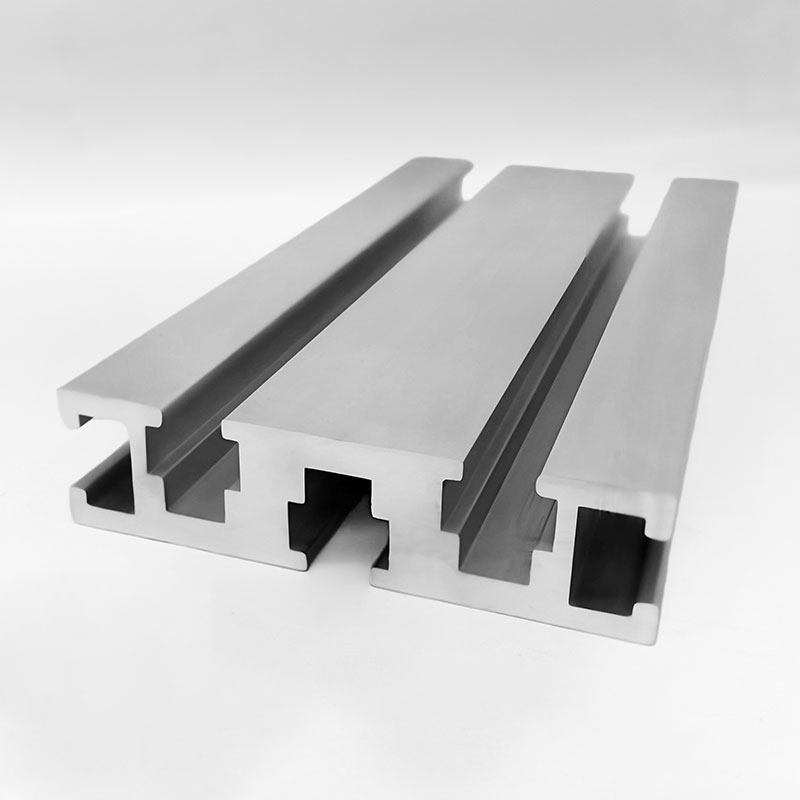
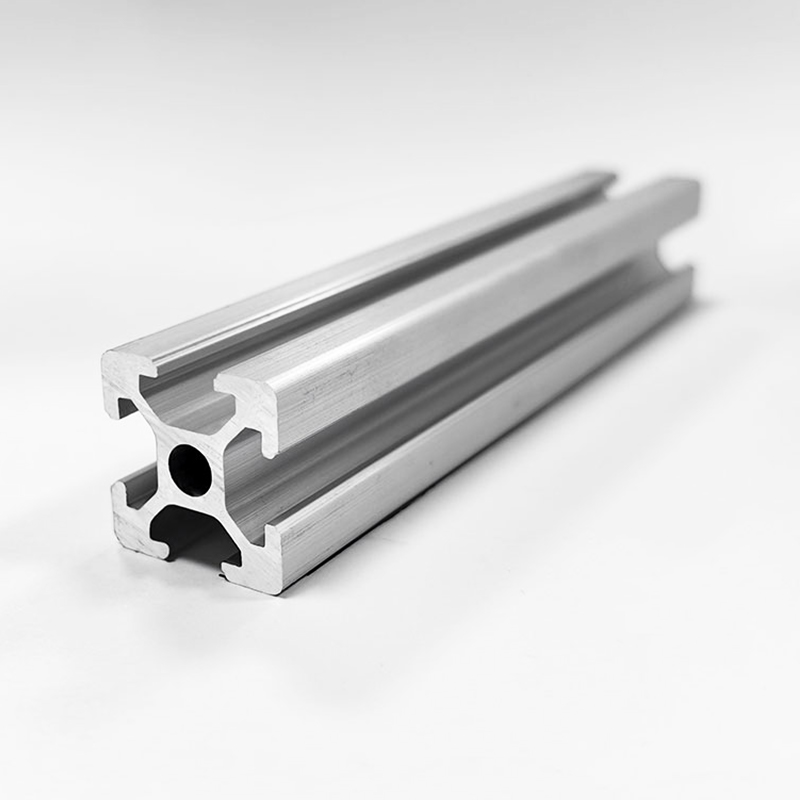
 HS-8-4040W Extra-Heavy-Duty 4040 T-Slot Aluminum Profile with 4.5mm WallThis 4040 profile's 4.5mm wall nearly doubles shear area versus thin-walled versions, making it a strong choice for joint zones under repeated loads, as highlighted by the surrounding discussion on wall thickness and shear strength.View Product →
For gantry brackets, cantilevered arms, and lifting points, specify heavy-duty 6061 profiles with thickened walls in joint zones and reserve standard profiles for remaining spans. The short version of our 6061 and 6063 comparison: 6063-T5 suits light framing, while 6061-T6 is the engineering default for joints carrying repeated shear loads.
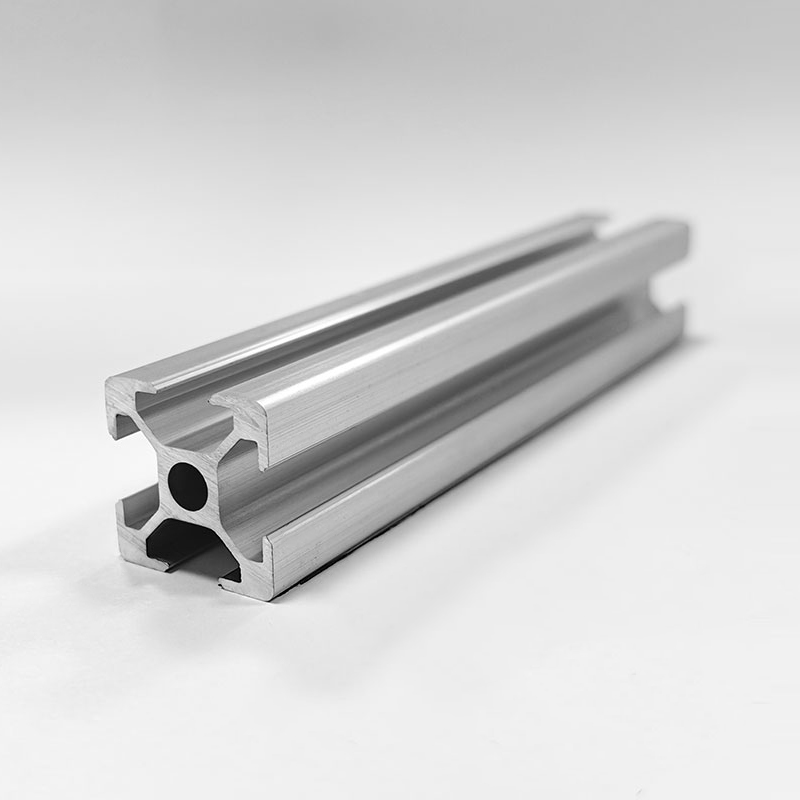
 HS-10-4545 Heavy-Duty 4545 Aluminum Extrusion with 2.4mm Thick WallIdeal for gantry brackets and cantilevered arms, this 45x45 profile offers a 2.4mm wall for added joint capacity. Its 10.2mm T-slot supports heavy fasteners, fitting applications where 6061-grade shear performance is emphasized.View Product →
Once the shear allowable is set, apply a safety factor of at least 2 for static loads and 3 for dynamic or reversing loads before comparing it against the applied joint force.
6061-T6 aluminum has a published shear strength of 207 MPa (30,000 psi). For design work, apply the 60 percent rule against its 310 MPa ultimate tensile strength, which gives roughly 186 MPa, then add a safety factor based on the loading type.
6063-T5 aluminum has a shear strength of about 117 MPa (17,000 psi). The T6 temper raises that to roughly 152 MPa (22,000 psi). Check the temper on the profile material certificate before calculating joint capacity, because many standard T-slot profiles are supplied in 6063-T5.
No. Anodizing forms a thin oxide layer, typically 5 to 25 micrometres thick, which improves wear and corrosion resistance but does not change the bulk shear strength of the extrusion. Structural calculations should ignore the coating and use the base alloy value.
A36 structural steel has a shear strength near 250 MPa, close to 6061-T6 aluminum at 207 MPa. Because aluminum weighs about one-third as much, the specific shear strength of 6061-T6 is roughly double that of A36, so aluminum frames can carry similar joint loads at a fraction of the weight.

Phone
+86-021-5788 5585
+86-133 8191 2789
Address
No. 218, Zhongde Road, Xiaokunshan Town, Songjiang District, Shanghai, China
Media
