
 English
 Español
hsau hsau hsau hsau hsau
hsau hsau hsau hsau

Aluminum is the most abundant metal in Earth's crust (8.2% by weight), yet it is never found in metallic form: it has to be refined from bauxite ore. The engineering significance starts with density: 2.70 g/cm3, about one-third of steel, combined with a self-healing oxide layer that stops most atmospheric corrosion before it begins. Yield strength spans from 90 MPa for annealed pure metal to more than 570 MPa for heat-treated 7xxx alloys. That spread is why aluminum properties and uses determine material decisions across packaging, transport, electrical distribution, and machine building.
For industrial buyers, the phrase lands on extruded profiles: 6xxx-series T-slot beams that carry loads, mount components, and build machine frames. This article covers the property data that drives selection, how alloy grade shifts performance, and where those properties appear in real products.
Content
The seven properties that govern most industrial aluminum applications are density, yield strength, modulus of elasticity, corrosion resistance, thermal conductivity, electrical conductivity, and coefficient of thermal expansion.
| Property | Typical Value | Engineering Impact |
| Density | 2.60-2.82 g/cm3 | 65% lighter than steel; 70% lighter than copper |
| Yield strength | 90-500+ MPa | Sets frame load limits and section size |
| Modulus of elasticity | 68-72 GPa | One-third of steel stiffness; use thicker sections |
| Melting point | 580-660 °C | Limits high-temperature service |
| Thermal conductivity | 120-235 W/m.K | Heat sinks, LED housings, mold tooling |
| Electrical conductivity | 30-38 MS/m | 52-61% IACS; busbars and cable ratings |
| CTE | 21-24 um/m.K | Expansion joints needed on long spans |
Pure aluminum is soft and ductile; annealed 1100 sheet yields at roughly 35 MPa. Structural alloys change that picture. A 6061-T6 temper reaches 276 MPa yield strength with 8-10% elongation, which is why the same alloy serves both architectural cladding and heavy machine frames.
The alloy series is the first decision point: 1xxx optimizes purity and conductivity, 5xxx optimizes marine corrosion resistance, and 6xxx optimizes the balance of strength, corrosion resistance, and extrudability.
Wrought aluminum alloys are grouped into series by their main alloying element. The practical selector looks like this:
Within the 6xxx family, five alloys cover nearly every T-slot framing need:
6061-T6 is the default for industrial T-slot systems because it machines cleanly, welds well with 4043 or 5356 filler, anodizes uniformly, and delivers 276 MPa yield at a modest premium over 6063. Where cosmetic anodizing matters most, 6063 or 6060 gives a smoother finish; where welded joints dominate the load path, 6005A and 6082 are safer.
T-slot extrusion framing converts aluminum's mechanical properties into reconfigurable structures such as machine bases, safety enclosures, workstations, conveyor supports, and laboratory benches, assembled with standard fasteners and no welding.
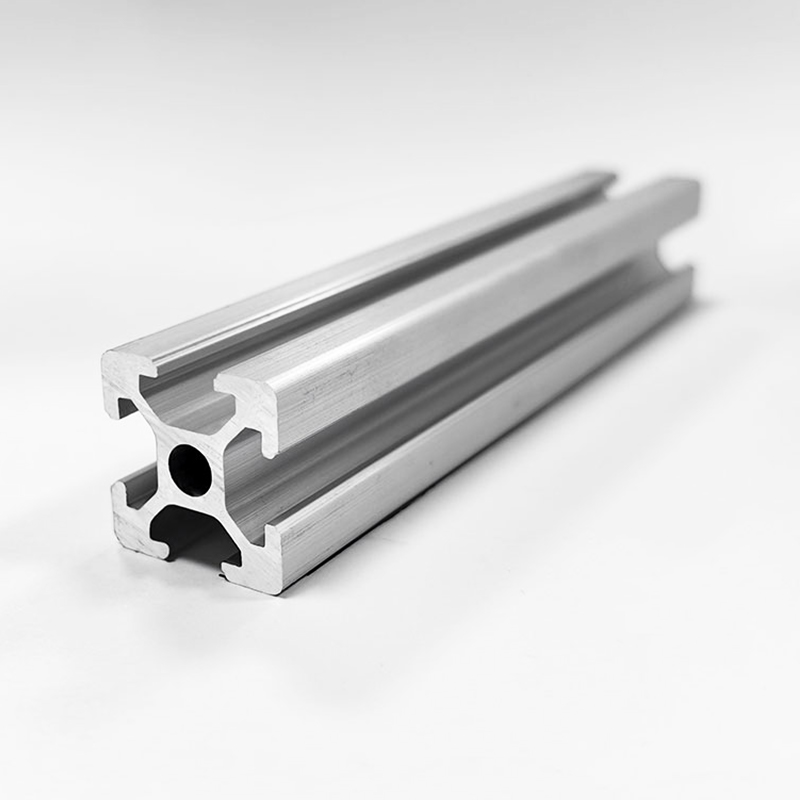
A T-slot profile has channels running its full length that accept T-nuts, bolts, and panel-mounting hardware. The system is modular: every profile is cut, drilled, and connected with corner brackets, gussets, and adjustable feet. The largest benefit is reconfigurability: a work cell can be dismantled and rebuilt in a new geometry with the same beams.
Series sizes run from 15-series micro-profiles to 120-series heavy-duty beams. Three profiles cover the majority of machine-building demand:
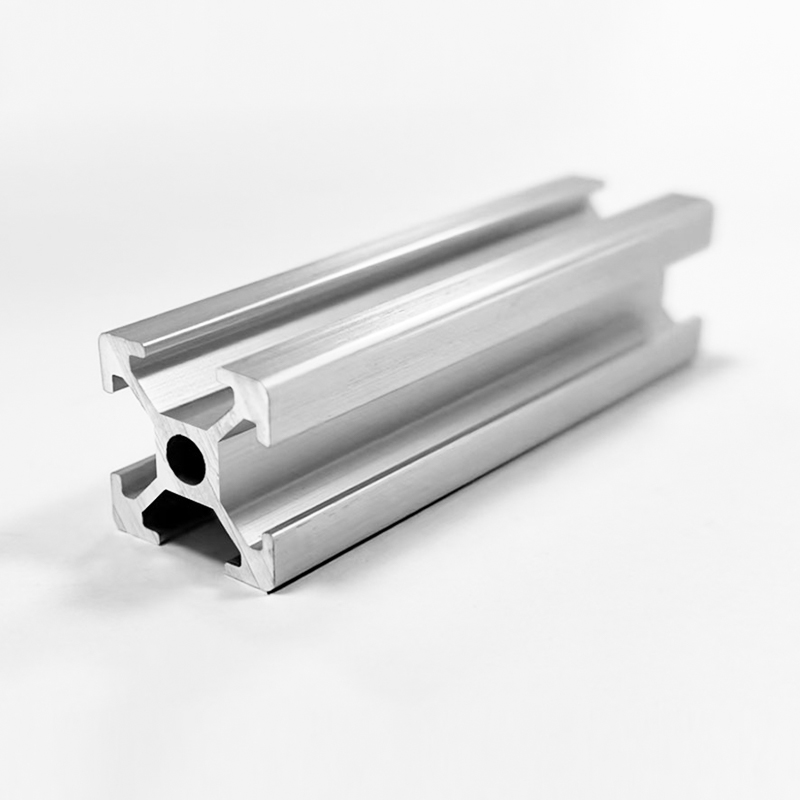
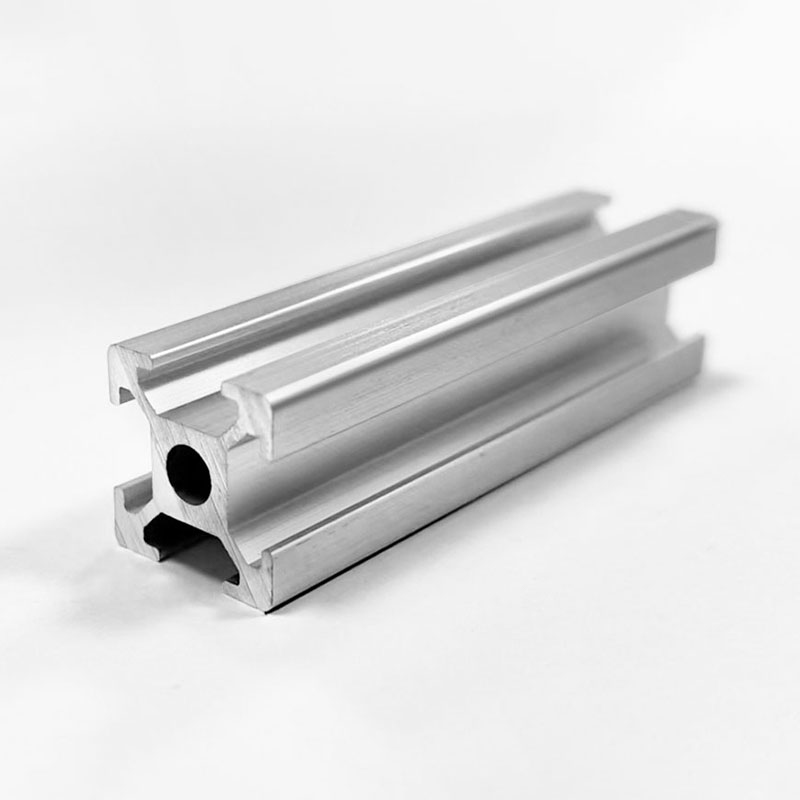
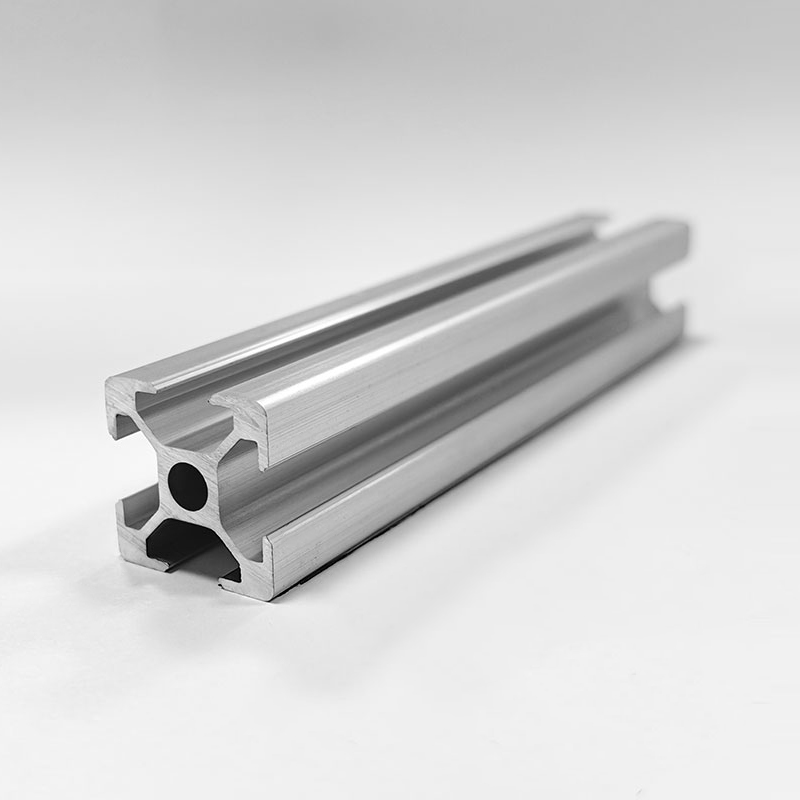
 2020 Aluminum T-Slot Profile, 20x20mm, 6mm Slot for Light FramesThis compact 20-series profile combines a 20mm square cross-section with a 6mm slot and anodized 6063-T5 body. Its lightweight design makes it a practical choice for enclosures, instrument panels, and small structural assemblies.View Product →
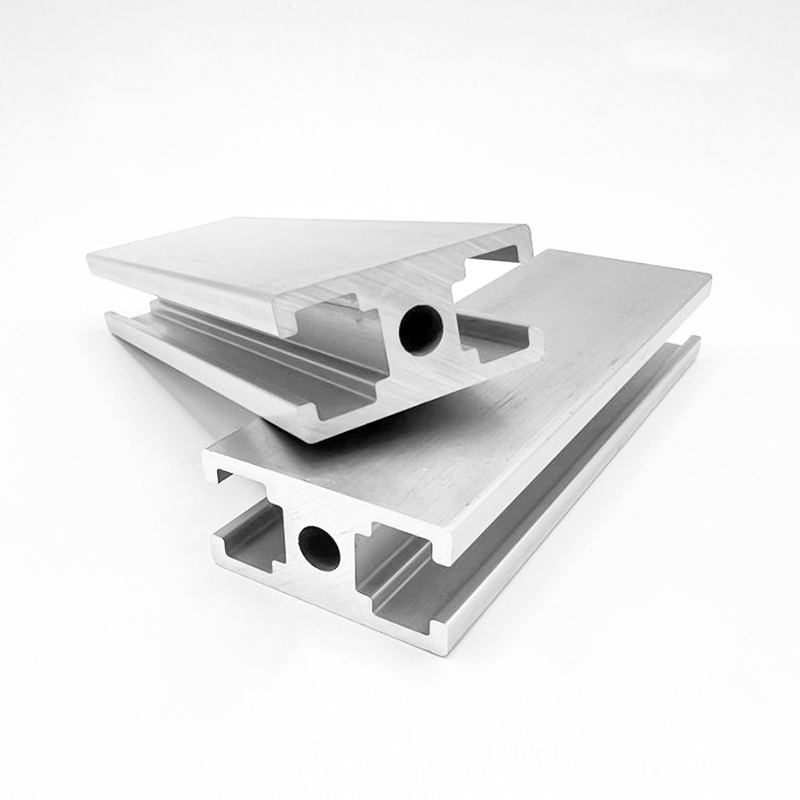
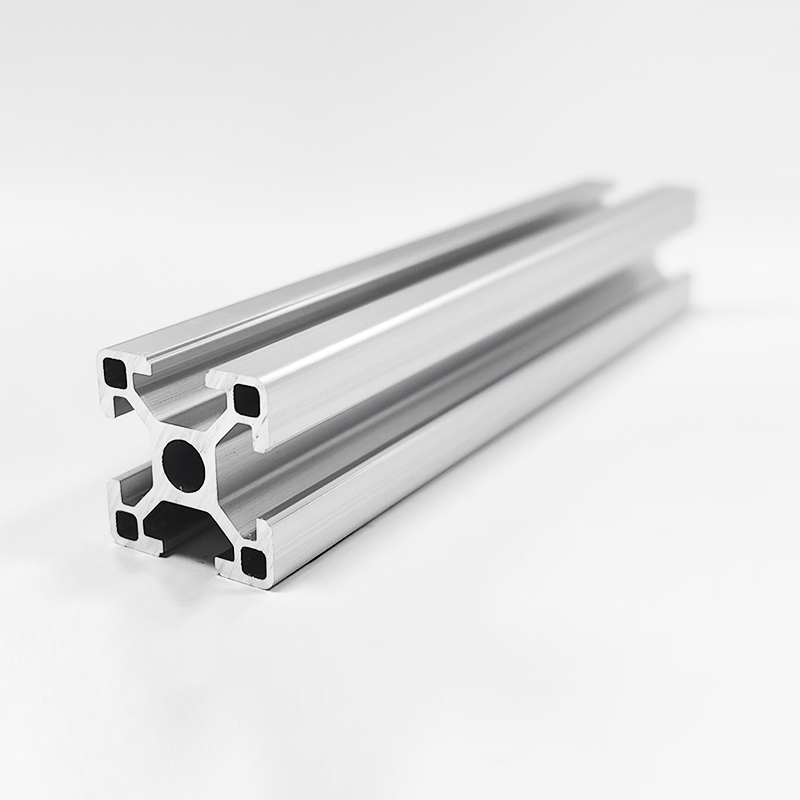
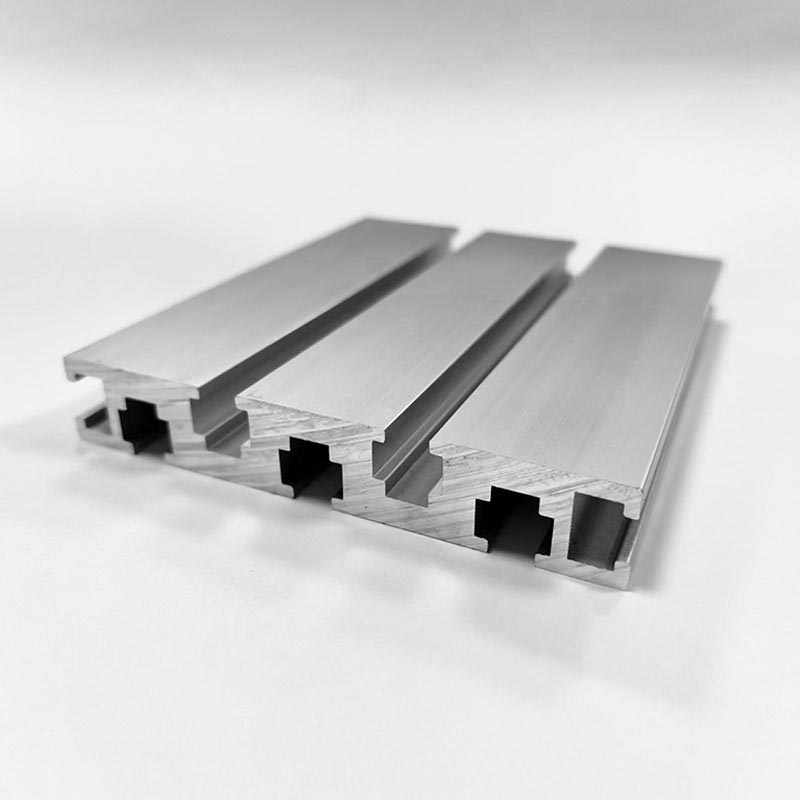
 HS-8-3030A High-Strength 3030 T-Slot Profile with 2.0mm Thickened WallFeaturing a 30mm cross-section and 2.0mm wall, this 6063-T5 aluminum profile offers improved load-bearing capacity and stability. Its standard T-slot supports modular assembly, making it suitable for heavy equipment frames, safety guards, and automation supports.View Product →
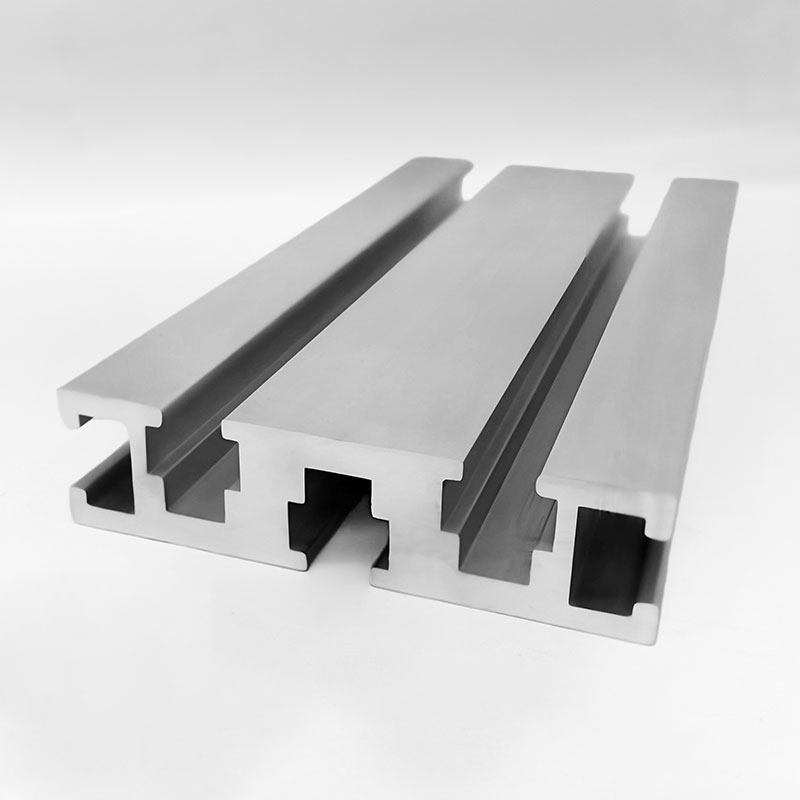
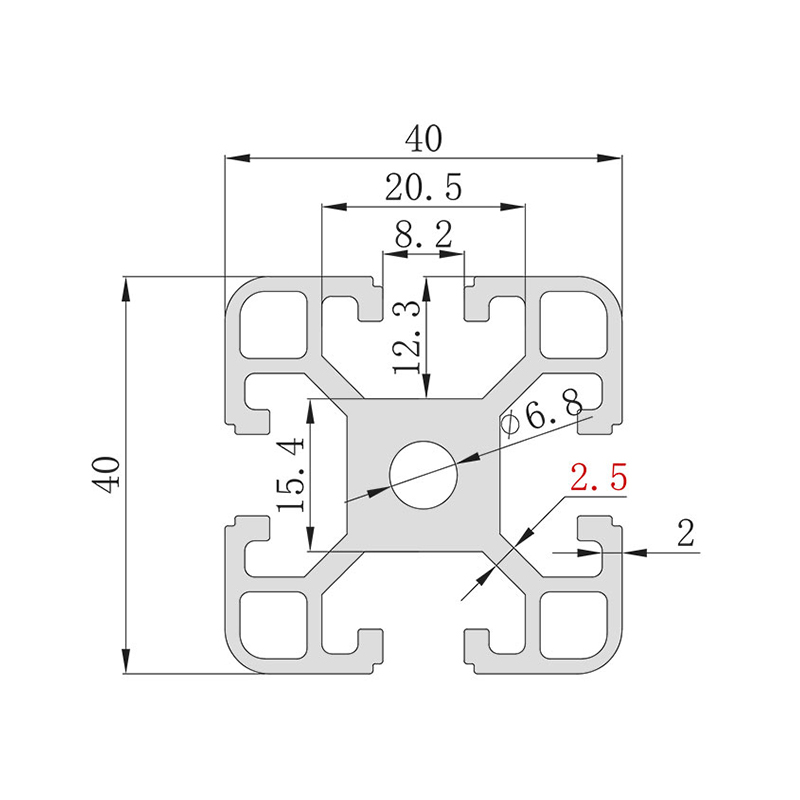 HS-8-4040B Thickened 4040 T-Slot Profile with 2.5mm Wall for Medium-Heavy LoadsWith a 40mm square section and 2.5mm wall thickness, this profile provides strong compression resistance and durable anodized finish. It is well suited for medium-to-heavy automation frames, protective fencing, and load-bearing conveyor supports.View Product →
Profile manufacturers such as Shanghai Huishuo Aluminum Industry Technology Co., Ltd., which operates three production bases in Shanghai, Anhui, and Jiangsu, have applied the full range of aluminum properties and uses to profile design: thickened walls for heavy loads, wide slots for larger hardware, dual-color anodizing for cosmetic builds, and extra-heavy-duty geometries for high-load automation frames.
Surface treatments extend aluminum from a bare-metal framing material into a component that resists wear, insulates electrically, controls color, and complies with food-contact or cleanroom requirements.
As-extruded aluminum carries a natural oxide film roughly 2-4 nm thick. That film is enough for indoor use, but industrial environments demand an engineered layer:
| Treatment | Layer Thickness | Key Effect |
| Anodizing, Type II | 5-25 um | Hard oxide; dye colors; electrical insulation |
| Hard anodizing, Type III | 25-150 um | 350-500 HV surface hardness; wear plates, guides |
| Powder coating | 60-120 um | Full color range; impact resistance; hides weld lines |
| Electrophoresis (ED) | 15-25 um | Uniform black or silver; strong adhesion; automotive trim |
Sandblasting before anodizing or coating removes extrusion die lines and produces a uniform matte texture that improves coating adhesion and hides surface variation. For outdoor frames, powder coating over a chromate or zirconium pretreatment is the standard route, with 20+ year service life documented on building facades.
6063 offers a smoother as-anodized finish and slightly better extrudability but lower yield strength (214 MPa vs 276 MPa in T6). 6061 is the better choice when strength, machinability, and weldability matter, which covers machine bases, structural frames, and load-bearing enclosures. For purely architectural trim and decorative sections, 6063 wins on surface quality.
Extrusions assemble with mechanical fasteners, so there is no weld distortion, no heat-affected zone, and no need for post-weld straightening. A typical 40-series T-slot frame can be stripped to individual beams in about 15 minutes and reassembled in a different layout. A welded steel frame requires cutting and re-welding for any change.
A single 4040 profile with 2.5 mm wall thickness spanning one meter with a mid-span point load is rated in the range of 1.5-3 kN under typical safety factors, depending on the exact section modulus and end conditions. For higher loads, 45- and 60-series profiles with thickened walls are the standard escalation path.
Yes, with the correct finish. Anodized 6063 or 6061 profiles survive decades of outdoor exposure in architectural applications. In coastal or chemically aggressive atmospheres, powder coating or hard-anodized layers over 6061-T6 provide the recommended protection; 6005A is preferred when welded joints are exposed.

Phone
+86-021-5788 5585
+86-133 8191 2789
Address
No. 218, Zhongde Road, Xiaokunshan Town, Songjiang District, Shanghai, China
Media
