
 English
 Español
hsau hsau hsau hsau hsau
hsau hsau hsau hsau

This guide maps the main application areas to the profiles that serve them: which industries rely on extruded sections, where T-slot framing beats welding, and how to read a series chart against payload and span. The product logic follows the catalog of Shanghai Huishuo Aluminum Industry Technology Co., Ltd., whose range runs from 15 series light framing to 120 series ultra heavy-duty sections.
Content
Aluminum extrusion applications cluster around one physical fact: a heated billet pushed through a die becomes a continuous profile with a constant cross-section, so complex structural shapes come out long, straight, and repeatable at low unit cost.
Because the die carries the geometry, a single pass delivers T-slots for fasteners, internal ribs for stiffness, screw ports, and hollow cavities that cut weight without cutting strength. Industry bodies such as the Aluminum Extruders Council catalog extruded products across six broad sectors:
Inside the factory, the automation group does the heaviest lifting, and it runs almost entirely on T-slot profiles. The rest of this article focuses there.
Walk through any modern assembly plant and the single largest aluminum extrusion application is structural framing: machine bases, perimeter guarding, workstations, and conveyor structures built from bolted T-slot profiles.
The reason is assembly economics. Profiles arrive anodized and ready to use, and every face carries standard slots that accept T-nuts, so panels, sensors, cable ducts, and hinges mount anywhere along a beam. There is no weld distortion to straighten, no grinding, and no repaint schedule, and a layout change means unbolting beams instead of cutting steel.
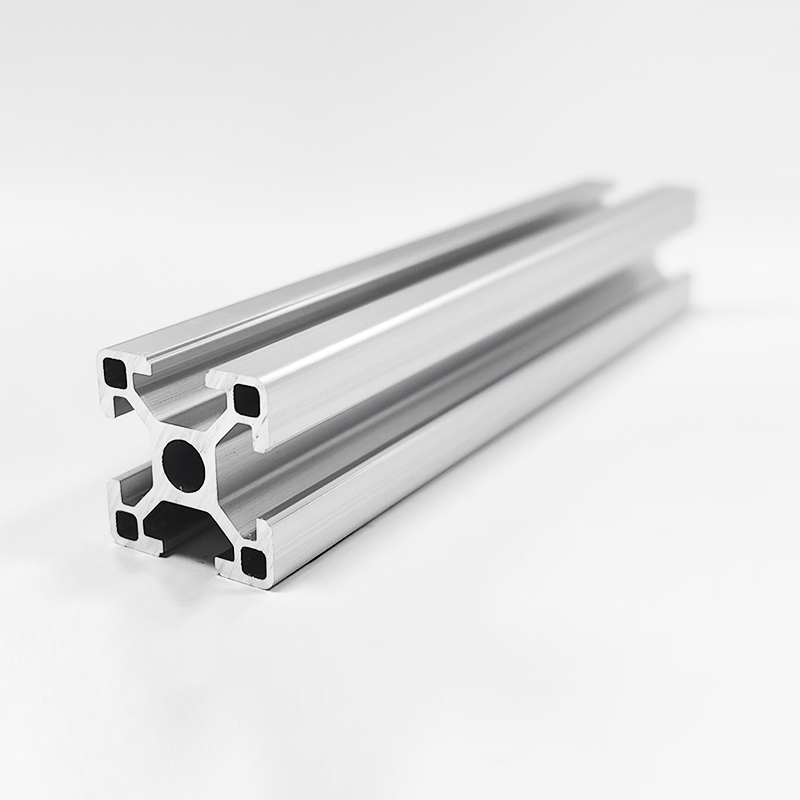
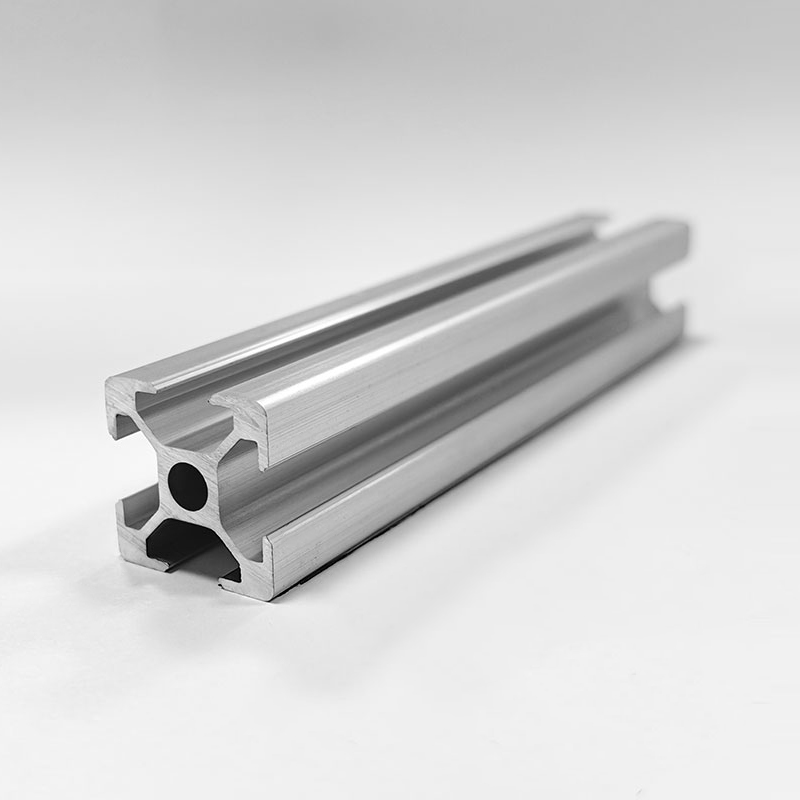
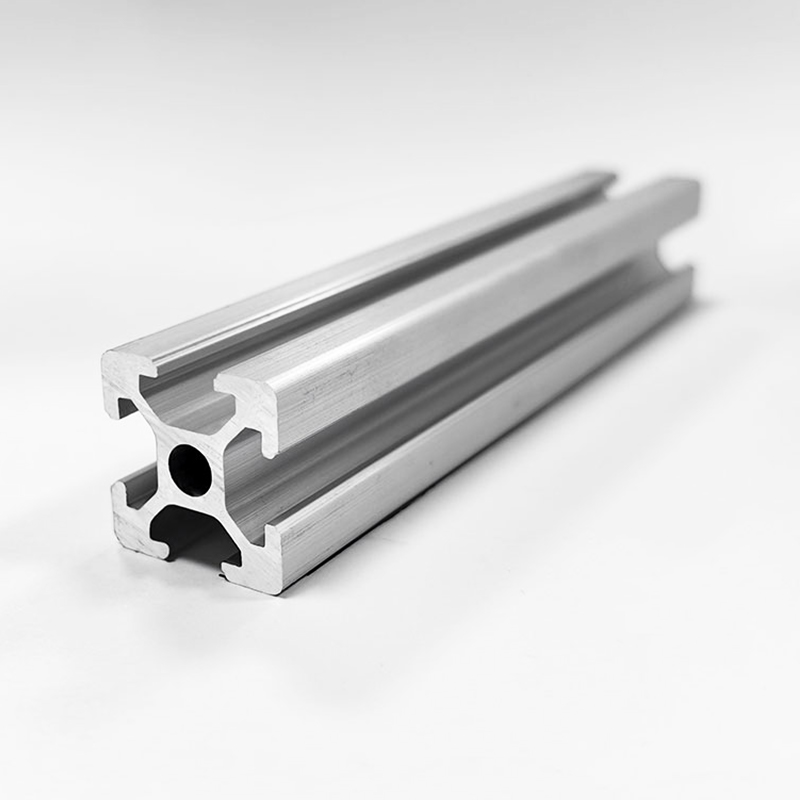
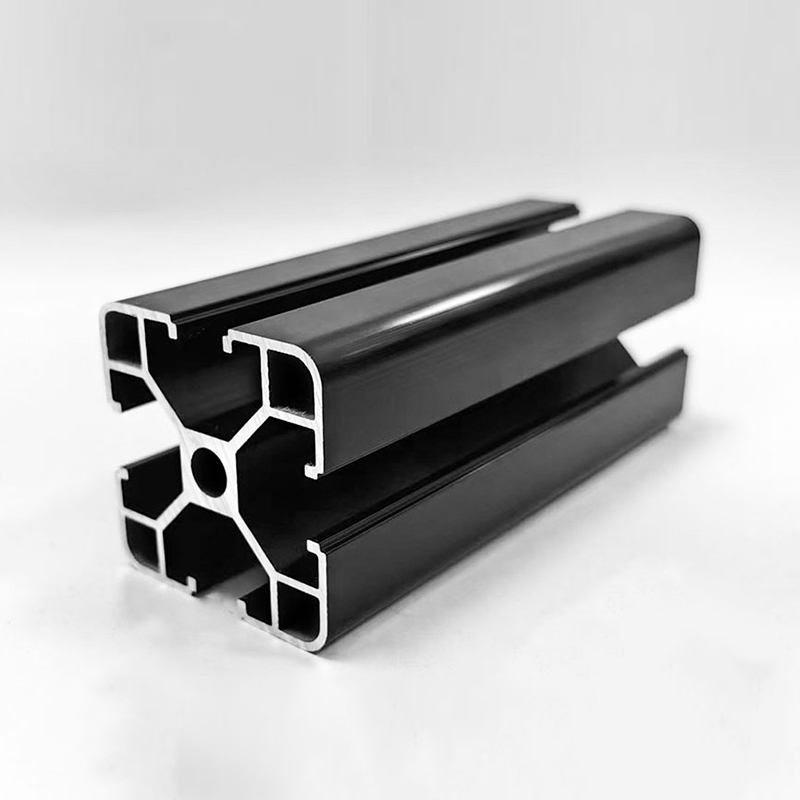 HS-8-4040L 40x40mm Lightweight T-Slot Aluminum ExtrusionA 6063-T5 40x40mm profile with 1.5mm walls and 0.90kg/m mass, suited to enclosures, fencing, and cleanroom partitions where assembly speed and cost per meter matter more than ton-level loads.View Product →
When the load is measured in kilograms instead of tons, the 20 and 30 series cover laboratory, test bench, and small enclosure work at the lowest cost per meter.
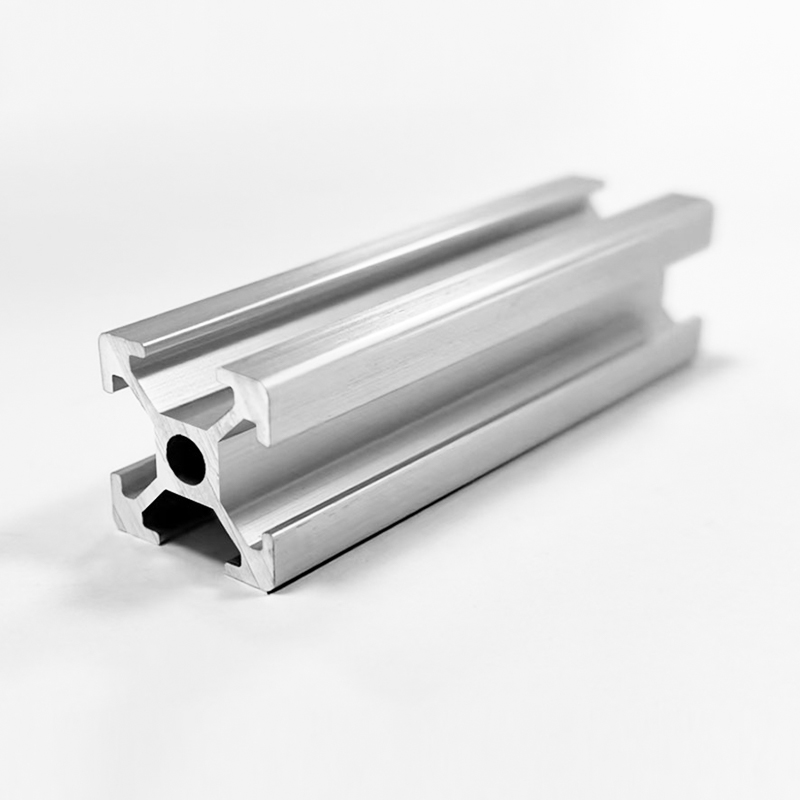
A 2020 profile weighs about 0.5 kg/m and a 3030 about 0.9, which keeps optical benches, instrument stands, printer frames, and chamber racks easy to move. Narrow 4 to 6 mm slots keep hardware flush inside thin walls, and lightweight variants trim further mass from mobile carts and overhead mounts.
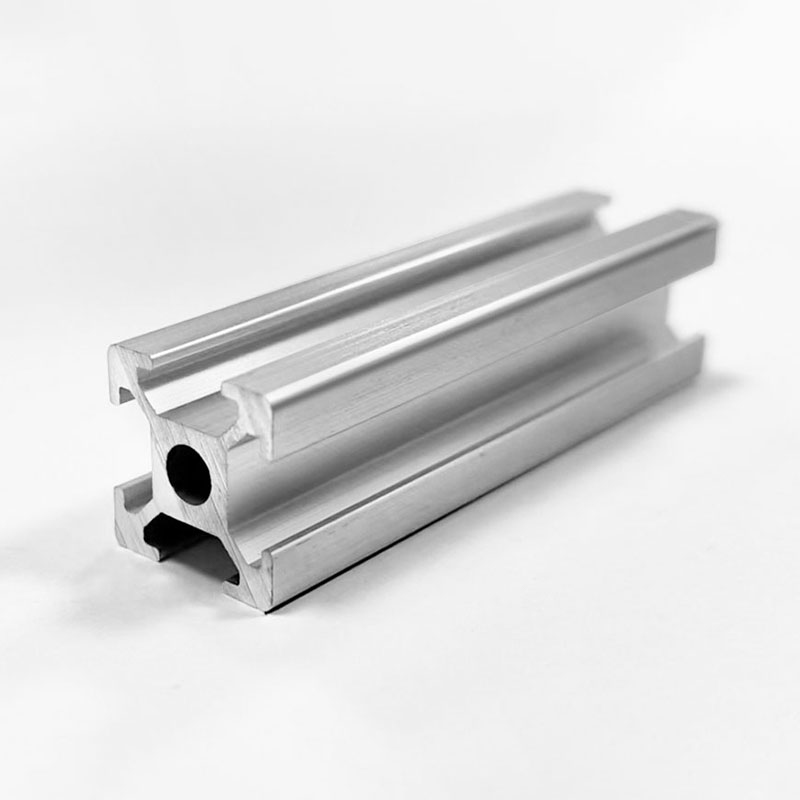
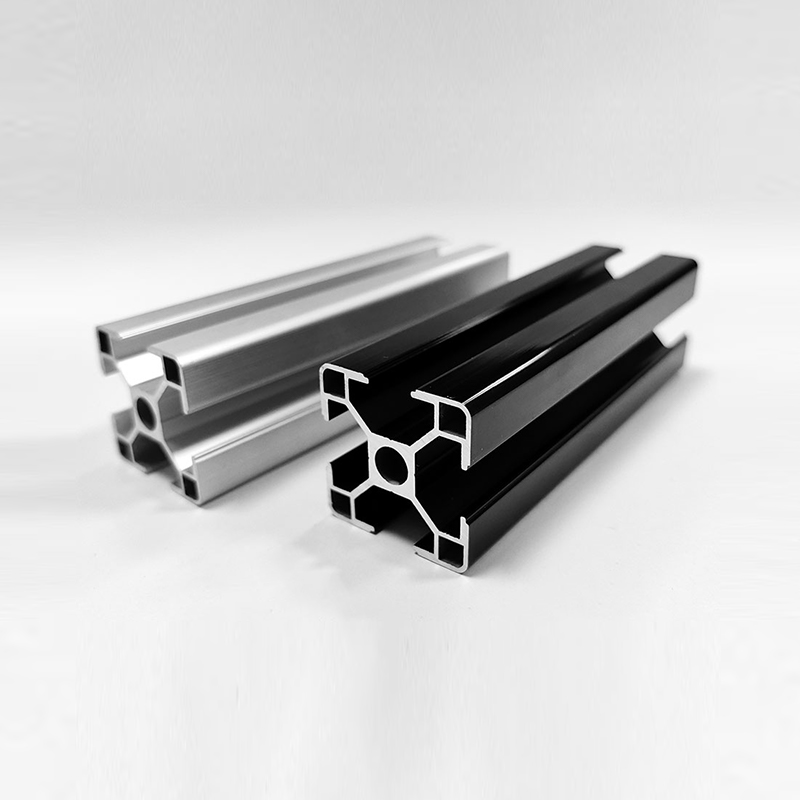 HS-8-3030QL 30x30mm Lightweight T-Slot Aluminum ExtrusionThis 30x30mm 6063-T5 extrusion weighs only 0.58kg/m with an 8.2mm slot, making it a practical pick for laboratory frames, optical benches, and display stands where easy handling and slim slots are priorities.View Product →
Series selection is a payload and span decision first; slot width and wall thickness come after the structure can carry the load. The table condenses the series logic, with masses stated as catalog averages.
| Series | Typical sections | Common slot | Approx. mass | Typical applications |
| 15 | 15x15 to 15x90 | 4 to 6 mm | about 0.3 kg/m | Light covers, models, display frames |
| 20 | 20x20 to 20x100 | 4 to 6 mm | about 0.5 kg/m | 3D printers, jigs, small enclosures |
| 30 | 30x30 to 30x150 | 6 to 8 mm | about 0.9 kg/m | Workstations, lab frames, light guarding |
| 40 | 40x40 to 40x160 | 8 to 10 mm | about 1.6 kg/m | Machine frames, conveyors, automation cells |
| 45 | 45x45 to 45x90 | 10 mm | about 2.1 kg/m | Long-span guarding, heavy benches |
| 60 | 60x60 to 60x120 | 10 mm | about 2.9 kg/m | Rigid machine frames, gantry beams |
| 80 | 80x80 to 80x160 | 10 mm | about 4.8 kg/m | Machine bases, high-load columns |
| 100 and 120 | 100x100 to 120x120 | varies by model | 7.4 to 11.5 kg/m | Multi-ton bases, press and test rigs |
The engineering background behind these families, from slot geometry to alloy behavior, is covered in depth in this guide to T-slot aluminium extrusion systems.
Above the 60 series, aluminum extrusion applications shift from framing to primary structure: machine bases, gantry columns, and large-span load paths that carry tons instead of kilograms.
An 8080 section brings roughly 4.8 kg/m, extra heavy-duty 4040 variants push walls to 4.5 mm, and the 120 series reaches 15 mm. At that scale the argument is stiffness per kilogram: bases, rail interfaces, and cable routing bolt together with far less dead weight than a cast equivalent, which matters for movable machinery and upper-floor installations.
Most T-slot stock is extruded in 6063-T5 for surface finish and extrudability, while 6061-T6 buys strength where deflection limits tighten. The trade-offs are compared in this aluminum profile selection analysis of 6061 versus 6063.
 HS-10-100100 Heavy-Duty 100x100mm T-Slot Aluminum ExtrusionWith a 100x100mm section, 6.2mm walls, and 10.33kg/m mass, this anodized profile delivers the rigidity needed for heavy-load industrial framing where standard light series profiles reach their span or deflection limits.View Product →
Standard profiles solve most framing problems, but a proprietary geometry, a sealed face, or an integrated fastening feature calls for a custom die, followed by CNC machining to hold the precision interfaces.
Shanghai Huishuo structures its service chain around that range: extrusion across 15 to 120 series, in-house custom mold making, CNC aluminum processing, anodizing, and complete frame design and assembly. Production runs from three bases in Shanghai, Anhui, and Jiangsu, about 30,000 square meters in total.
CNC machining closes the final gap: milled datum faces, tapped ports, and precision bores bring profile assemblies to machine-tool accuracy.
The largest groups are industrial machine framing and automation, transportation components such as battery trays, building systems like curtain walls, and equipment in energy, aerospace, and healthcare. On the factory floor, T-slot profiles handle most structural work.
Start with span and payload: the 40 series is the default for general machine frames, the 30 series covers benches and light guarding, and the 60 to 120 series take heavy bases. Confirm the pick against load tables for the exact wall thickness.
For most medium-load structures, yes. Bolted T-slot frames assemble faster, need no corrosion protection, and rework easily as equipment changes. Steel keeps the advantage at extreme loads, very long spans, and where minimum deflection under impact matters more than flexibility.
When the geometry itself does work that standard profiles cannot: integrating fastening points, sealing a face, or meeting a strict weight target. With repeating volumes, the per-meter and assembly savings usually repay the die; for one-off builds, standard profiles stay cheaper.

Phone
+86-021-5788 5585
+86-133 8191 2789
Address
No. 218, Zhongde Road, Xiaokunshan Town, Songjiang District, Shanghai, China
Media
