
 English
 Español
hsau hsau hsau hsau hsau
hsau hsau hsau hsau

Content
T-slot aluminium extrusions, often referred to as modular industrial aluminium framing, have revolutionized modern machine building, factory automation, cleanroom construction, and custom workstation design. Unlike traditional welded steel structures that require skilled manual welding, grinding, stress relief, and surface painting, T-slot aluminium profiles utilize an interconnected modular assembly system.
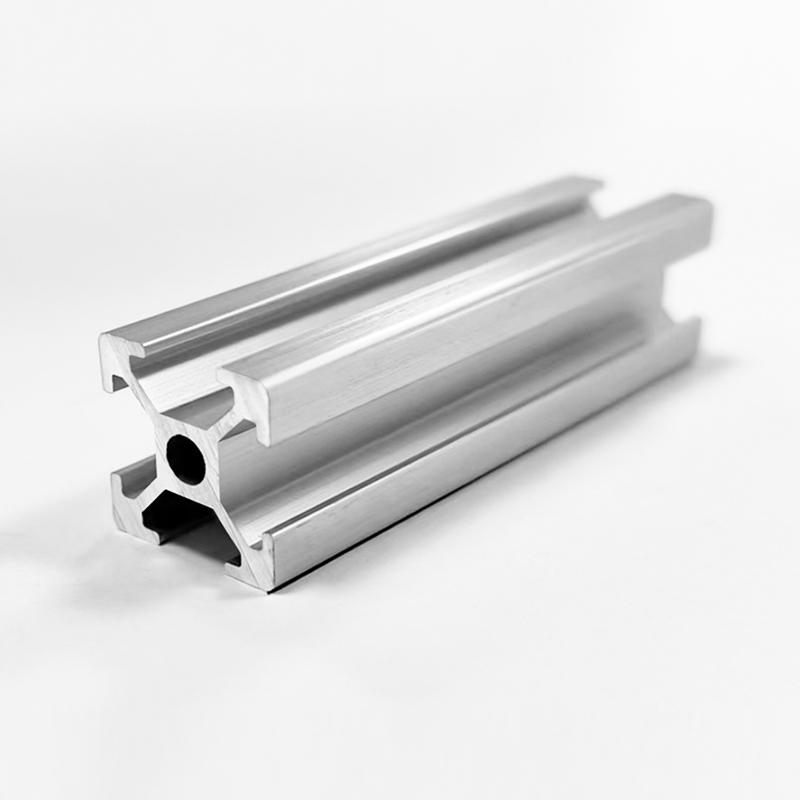
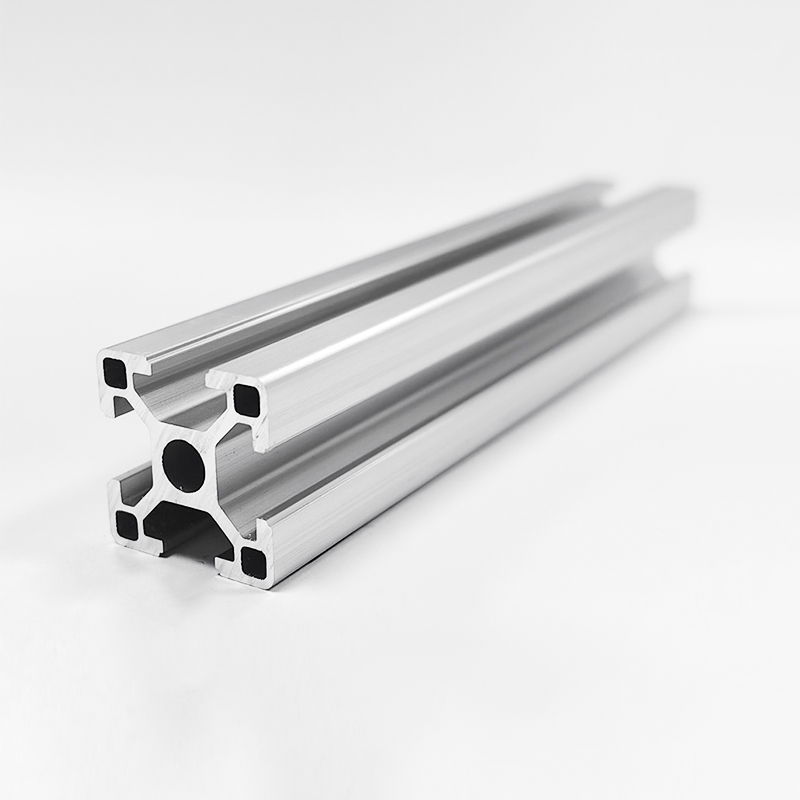
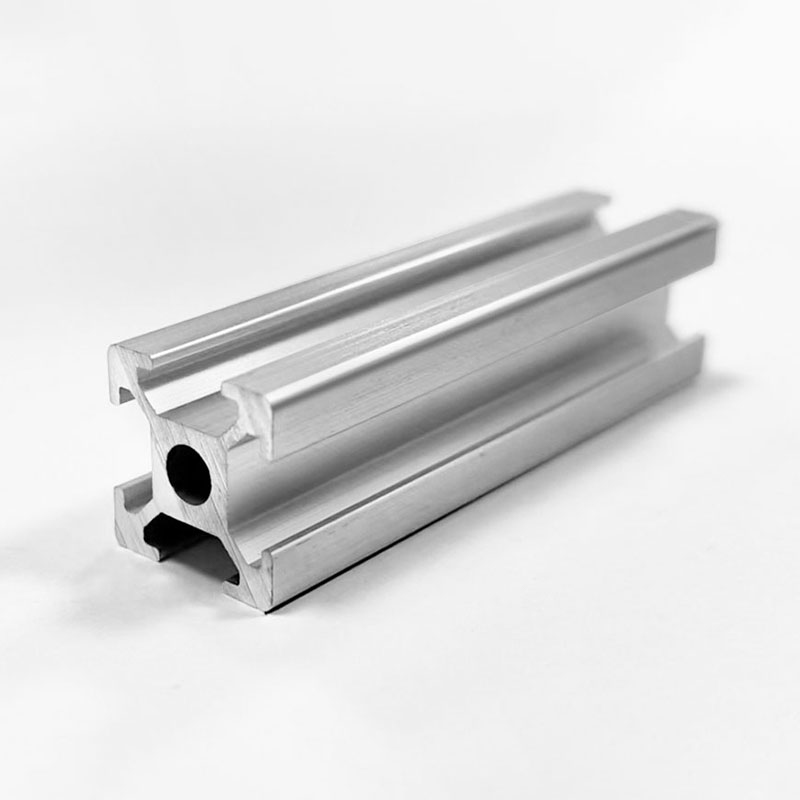
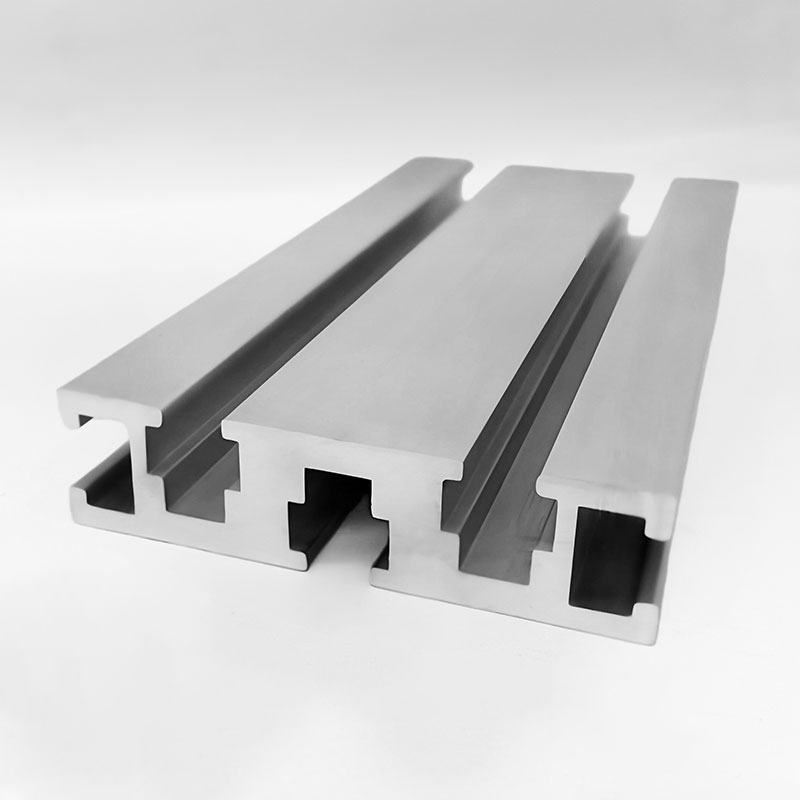
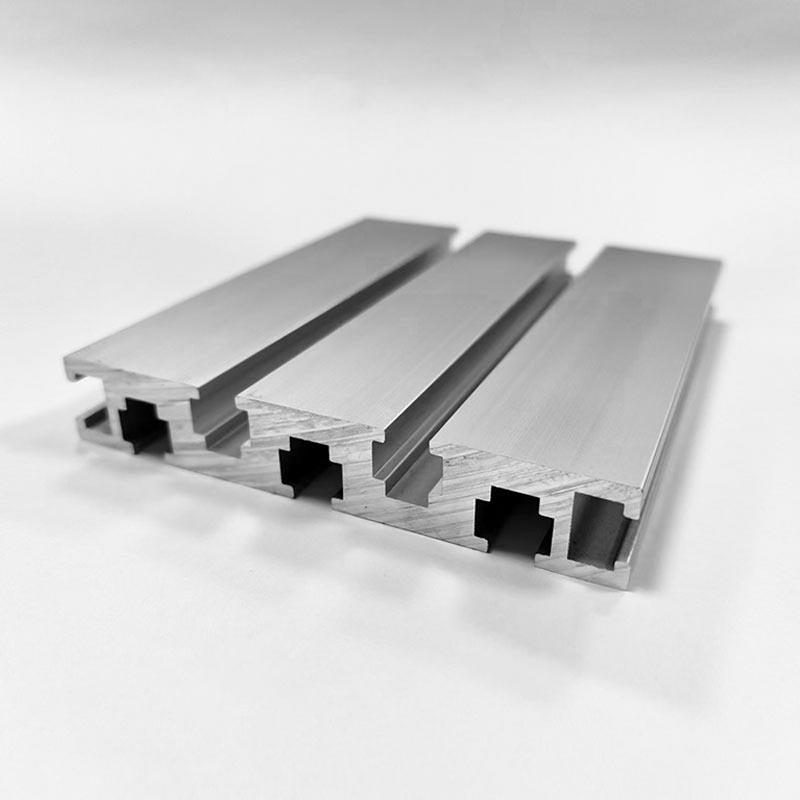
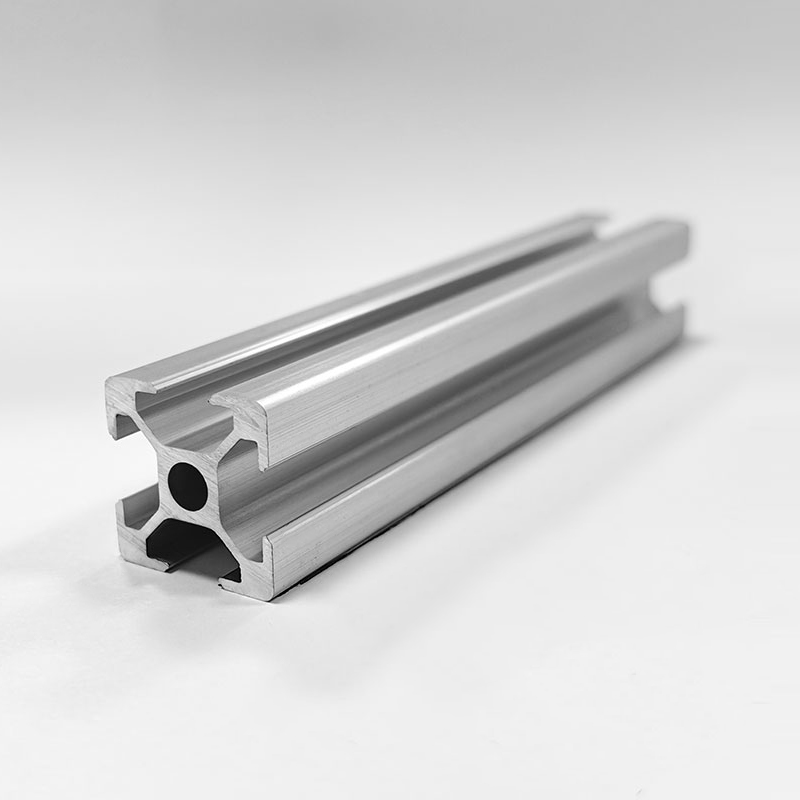
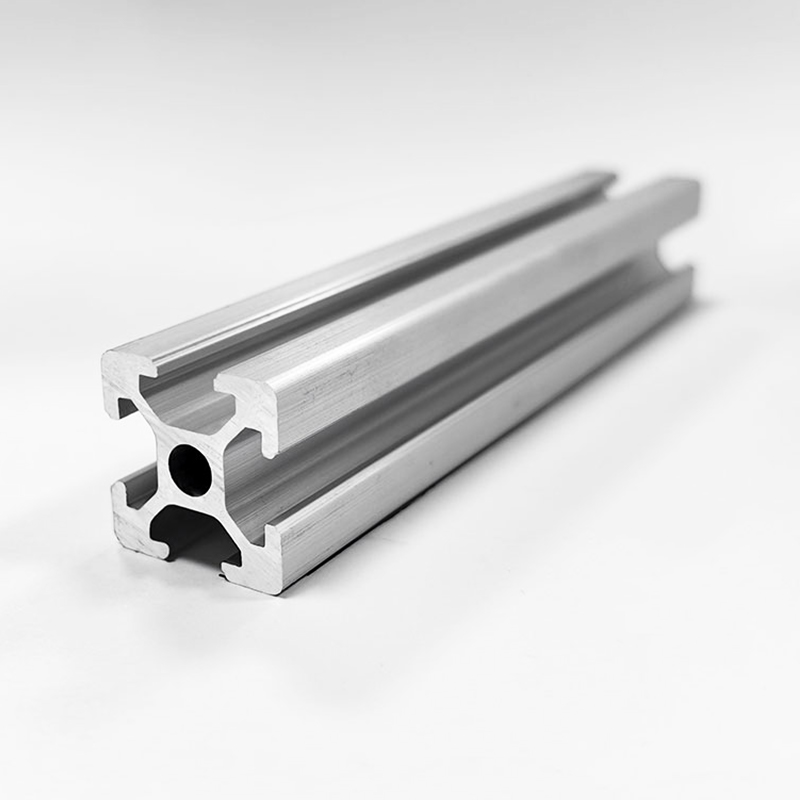
The defining characteristic of a T-slot profile is a continuous T-shaped cross-sectional groove running along one or more longitudinal faces. This channel serves as a recessed fastening track, allowing T-nuts, drop-in roll nuts, and hex bolts to slide into position at any location along the profile length. When tightened, the mechanical fastener locks firmly against the inner shoulder of the slot, providing high clamping force without necessitating drilling, tapping, or permanent joint thermal distortion.
For structural engineers, original equipment manufacturers, and plant maintenance managers, specifying the correct T-slot aluminium profile system involves evaluating mechanical load capacity, slot width dimensioning, hardware compatibility, profile wall thickness, and alloy tempers. This technical guide provides a detailed analysis of metric and fractional profile series, hardware selection criteria, mechanical deflection behavior, surface finishes, and structural design principles.
T-slot aluminium extrusions are categorized into standardized series based on their primary cross-sectional boundary dimensions. The two global standards are Metric Series (predominantly measured in millimeters across Europe and Asia) and Fractional Series (measured in decimal inches across North America).
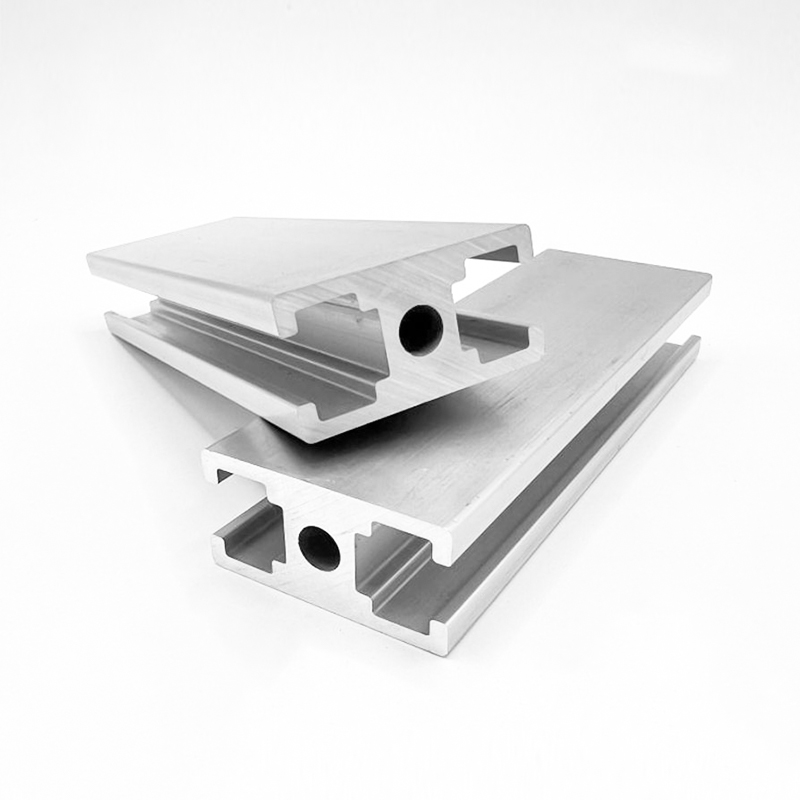
Metric series T-slot profiles are designated by their base dimension in millimeters. For example, 20 Series indicates a 20 millimeter base grid. Within each series, rectangular variations exist to increase section strength and bending resistance in a targeted orientation.
Fractional series extrusions follow imperial unit increments, primarily utilizing 1.0 inch (10 Series) and 1.5 inch (15 Series) dimensional baselines.
| Profile Series | Grid Baseline | Standard Slot Width | Typical Center Bore Diameter | Recommended Fastener Thread | Typical Application Scope |
|---|---|---|---|---|---|
| 20 Series (2020) | 20mm by 20mm | 6.2 mm (Slot 6) | 4.2 mm | M4 or M5 | Enclosures, light 3D printer frames, sensor brackets |
| 30 Series (3030) | 30mm by 30mm | 8.2 mm (Slot 8) | 6.8 mm | M6 or M8 | Workstations, light machine guards, small conveyors |
| 40 Series (4040 Light) | 40mm by 40mm | 8.2 mm (Slot 8) | 6.8 mm | M6 or M8 | Factory safety fencing, display rigs, light machinery |
| 40 Series (4040 Heavy) | 40mm by 40mm | 8.2 mm (Slot 8) | 6.8 mm | M8 | Automation gantries, heavy CNC machinery frames |
| 45 Series (4545) | 45mm by 45mm | 10.2 mm (Slot 10) | 10.2 mm | M8, M10, or M12 | Heavy machine bases, heavy gantry uprights |
| 10 Series (Fractional) | 1.00 in by 1.00 in | 0.255 in | 0.201 in | 1/4 inch UNC | General assembly fixtures, laboratory benches |
| 15 Series (Fractional) | 1.50 in by 1.50 in | 0.322 in | 0.257 in | 5/16 inch UNC | Automotive assembly cells, heavy material racks |
The structural integrity of T-slot aluminium extrusions depends on the chemical composition of the alloy and the applied artificial aging process. The vast majority of T-slot profiles are extruded from 6xxx series alloys containing magnesium and silicon.
The modular adaptability of a T-slot aluminium extrusion frame depends on its connecting hardware. Mechanical joints must withstand static tensile forces, joint shear forces, and rotational bending moments caused by applied loads.
T-nuts are the primary threaded anchors inserted into the T-slot channel.
When designing structural machinery frames, gantry beams, or assembly platforms using T-slot extrusions, engineers evaluate structural deflection under static load conditions to ensure proper frame stiffness.
The deflection resistance of a T-slot profile is dictated by its cross-sectional geometry, specifically its Area Moment of Inertia measured in centimeters to the fourth power.
Under a centered point load on a supported beam span, deflection increases proportionally with the cube of the unsupported span length, while inversely proportional to the elastic modulus of the material (68.9 Gigapascals for aluminum) and the cross-sectional area moment of inertia. Designers can reduce deflection by increasing section depth or choosing heavy-wall profiles rather than changing to higher-strength alloys of the same dimensions.
| Profile Cross-Section | External Size | Wall Structure Type | Primary Axis Inertia (cm4) | Secondary Axis Inertia (cm4) | Load Resistance Performance |
|---|---|---|---|---|---|
| 2020 Standard | 20mm by 20mm | Single Hollow Core | 0.72 | 0.72 | Light enclosure loads |
| 3030 Standard | 30mm by 30mm | Single Hollow Core | 2.85 | 2.85 | Medium workstation loads |
| 4040 Light | 40mm by 40mm | Quad Hollow Core | 9.10 | 9.10 | Standard safety fence framing |
| 4040 Heavy | 40mm by 40mm | Heavy Web Core | 14.20 | 14.20 | High rigidity machine frames |
| 4080 Heavy | 40mm by 80mm | Dual Web Rectangle | 112.50 | 16.80 | High beam bending resistance |
| 4545 Heavy | 45mm by 45mm | Reinforced Web Core | 21.80 | 21.80 | Heavy duty support pillars |
| 8080 Heavy | 80mm by 80mm | Multi-Cell Structural | 215.40 | 215.40 | Heavy structural machine bases |
Industrial applications expose T-slot framing to various environmental conditions, including airborne moisture, cutting fluid coolants, abrasive dust, and cleanroom particulate requirements.
Thermosetting polymer powder (typically polyester or epoxy-polyester hybrid) is electrostatically applied and cured in an oven at 180 to 200 degrees Celsius. Powder coating produces a thicker protective layer (60 to 100 microns) that offers high impact resistance against mechanical tool collisions in harsh industrial environments.
Achieving precise squareness and joint fit-up requires controlling dimensional tolerances during extrusion, cutting, and drilling operations.
T-slot extrusions intended for modular frame building follow tight precision tolerance classes specified under European and international standards:
The matrix below helps engineers match T-slot series specifications to specific functional equipment setups:
| Industry Sector | Typical Application Case | Primary Recommended Series | Preferred Alloy and Temper | Essential Accessory Hardware |
|---|---|---|---|---|
| Industrial Automation | Safety fencing, robotic cell perimeters | 4040 Light or 3030 | 6063-T5 | Yellow slot cover strips, floor mounting brackets |
| Heavy Machinery | CNC machine bases, gantry supports | 4590 or 8080 Heavy | 6061-T6 or 6005A-T6 | High-tensile steel corner gussets, M12 leveler feet |
| Electronics and Medical | Cleanroom workstations, conveyor tracks | 3030 or 4040 Clear Anodized | 6063-T6 | Smooth slot-cover profiles to prevent dust accumulation |
| Additive Manufacturing | 3D Printer enclosure frames, desktop CNC | 2020 or 2040 Black Anodized | 6063-T5 | Drop-in roll nuts, internal 90-degree L-brackets |
| Automotive Assembly | Worker assembly line benches, material carts | 15 Series or 4545 | 6063-T6 | Heavy-duty lockable swivel casters, panel grabbers |
T-slot aluminium extrusion frames eliminate the need for manual welding, heat-treatment stress relief, grinding, and surface painting. They can be assembled using basic hand tools, allowing on-site alignment adjustments and rapid design modifications. Additionally, aluminium is approximately one-third the weight of steel while providing high strength-to-weight ratios and natural corrosion resistance without secondary anti-rust painting.
No, metric and fractional T-slot profiles are generally not directly compatible. A Metric 20 Series or 40 Series profile uses millimeter slot dimensions (such as 6mm or 8mm slot width) and metric fastener threads. A Fractional 10 or 15 Series profile uses inch-based slot dimensions and UNC fastener threads. Mixing metric profiles with fractional T-nuts can result in binding or insufficient clamping force.
6063-T5 is the standard choice for general industrial framing, machine guarding, and workstations due to its surface finish quality, extrudability, and ease of anodizing. However, if your frame will be subjected to high dynamic loads, severe impact vibrations, or heavy structural overhangs (such as dynamic robotic gantries or heavy CNC chassis), select 6061-T6 or 6005A-T6 profiles for their higher yield strength and wear resistance.
Dust accumulation in open slot channels can be prevented by installing flush PVC or aluminium slot cover strips. These flexible profiles press directly into unused slot openings, creating a smooth exterior surface that can be wiped down in cleanroom, food processing, or medical environments.
The difference lies in profile wall thickness, internal webbing structure, and total aluminum mass per linear meter. For example, a 4040 Light profile features thinner outer walls and larger hollow cavities, reducing profile weight and cost for non-structural enclosure applications. A 4040 Heavy profile incorporates thicker walls and solid central diagonal cross-bracing, providing higher moment of inertia, joint thread engagement depth, and load-bearing capacity.

Phone
+86-021-5788 5585
+86-133 8191 2789
Address
No. 218, Zhongde Road, Xiaokunshan Town, Songjiang District, Shanghai, China
Media
