
 English
 Español
hsau hsau hsau hsau hsau
hsau hsau hsau hsau

That trade study is, in miniature, the whole case for the advantages of hard alloy aluminum: more strength per kilogram, predictable machined tolerances, and joining logic that favors bolts over welds. As an industrial T-slot profile and custom extrusion manufacturer, Shanghai Huishuo Aluminum Industry Technology Co., Ltd. fields this question from equipment makers deciding where hard alloys justify their premium and where they do not. The sections below put numbers on that decision.
Content
Hard alloy aluminum has no single official definition; in daily engineering use it means the heat-treatable wrought families, chiefly 2xxx, 6xxx structural grades such as 6061, and 7xxx, which gain strength from alloying elements and controlled heat treatment rather than from cold work alone.
Hard alloy aluminum: a wrought aluminum alloy with deliberate additions of copper, magnesium, silicon or zinc that is strengthened by solution heat treatment and artificial ageing (T5 through T7 tempers), reaching tensile strengths well above those of pure or non-heat-treatable grades.
The four-digit designation system makes the split easy to read, because the first digit names the principal alloying element, and that choice drives strength, corrosion behavior and extrudability:
For buyers weighing the two most common extrusion grades against each other, this technical comparison of 6061 and 6063 profile selection walks through where each grade wins on strength, finish and cost.
The advantages of hard alloy aluminum are measurable rather than cosmetic: about 65 percent higher tensile strength than the 6063 finishing grade, better fatigue life, higher wear resistance, tighter dimensional stability, and more load capacity from a smaller cross-section.
The chart below puts the alloy families side by side, and the jump from 6063 to 6061-T6 and on to 7075-T6 is exactly what a buyer pays for when specifying hard alloy:
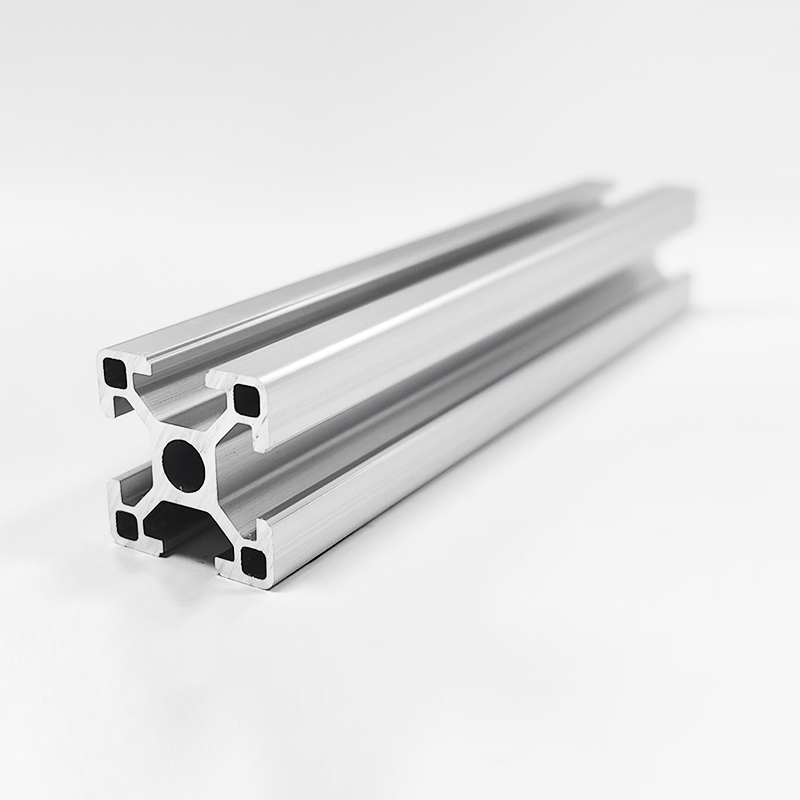
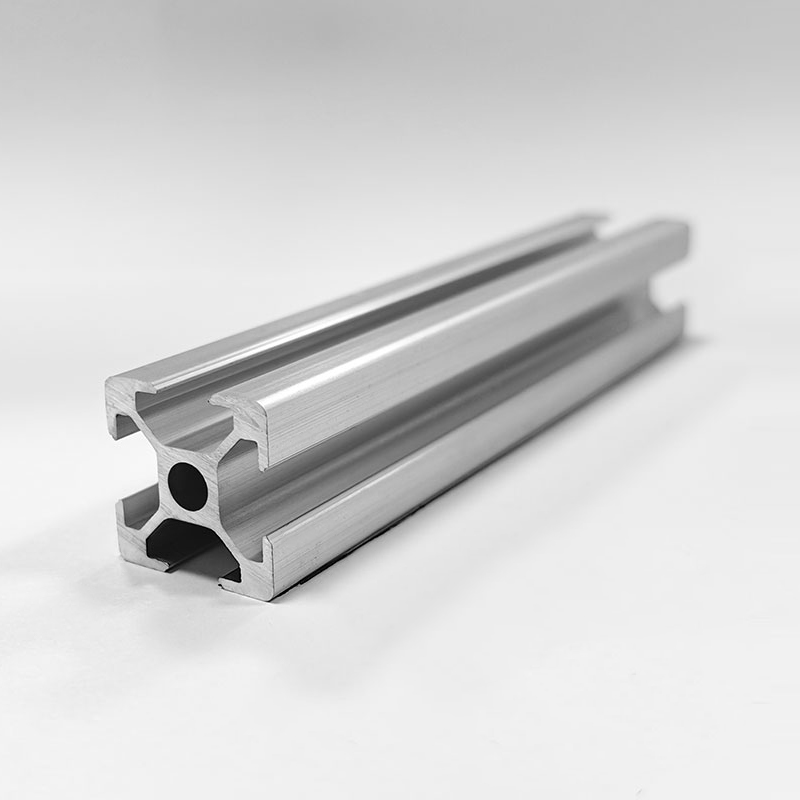
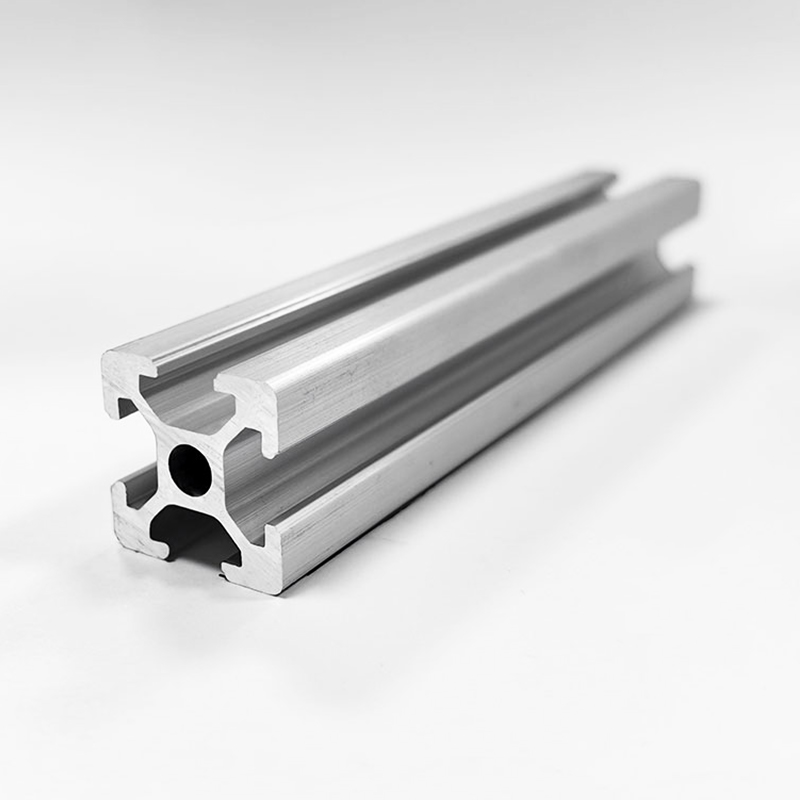
On the factory floor these numbers become catalog choices: a high-strength 4040 profile with a 3.2 mm wall, for instance, carries medium-duty machine loads that would otherwise force the design up to a heavier 45 or 50 series section.
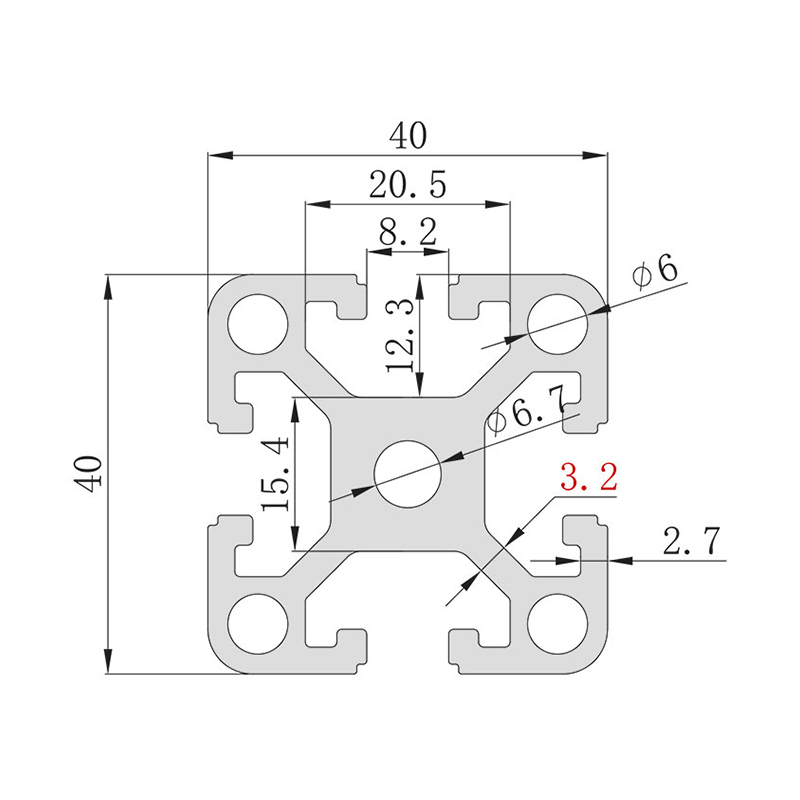 HS-8-4040D High-Strength 4040 T-Slot Aluminum Profile with 3.2mm Thick WallThis 40x40mm 6063-T5 profile with a 3.2mm thickened wall carries medium-duty machine loads, making it a practical catalog choice for frames that would otherwise require heavier 45 or 50 series sections.View Product →
Hard alloys earn their premium wherever a frame carries load, moves, or holds alignment: machine bases, gantries, heavy-duty storage racks, robot risers and press-side guarding. Static guards and light workstations rarely need them.
| Selection factor | 6063-T5 soft alloy | 6061-T6 hard alloy |
| Typical tensile strength | 186 MPa | 310 MPa |
| Typical yield strength | 145 MPa | 276 MPa |
| Extrusion speed and shape complexity | Excellent, suits thin intricate sections | Lower speeds, thicker minimum walls |
| Anodized finish quality | Bright and uniform | Slightly duller but uniform |
| Best framing use | Guards, benches, light racks | Bases, gantries, heavy racks |
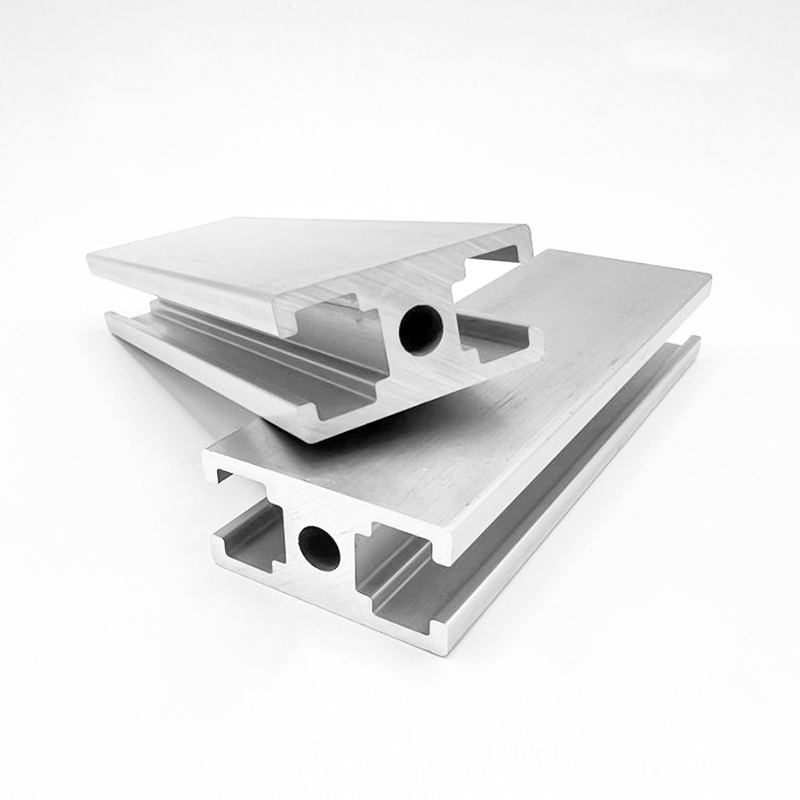
For base and column structures in the 80 series, the usual hard-duty answer is an extra-thick-wall 8080 profile, which pairs a wide T-slot footprint with walls sized for bolted, high-load joints.
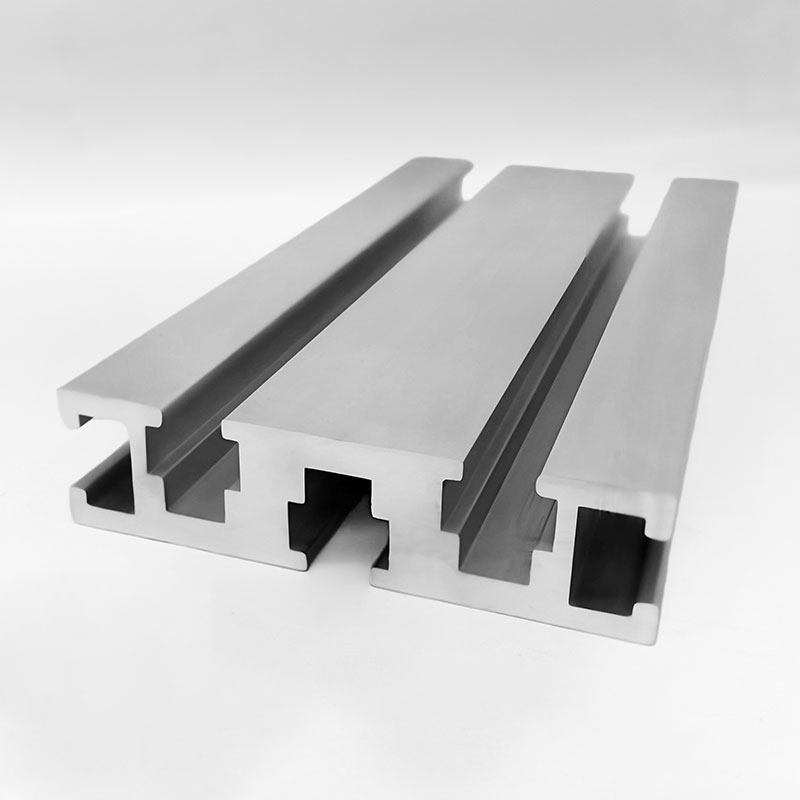
 HS-8-8080W Extra-Thick Wall 8080 T-Slot Aluminum Profile for Heavy LoadsWith a 5mm extra-thick wall and 80x80mm cross-section, this profile suits bolted, high-load base and column structures in the 80 series, pairing a wide T-slot footprint with extra-heavy load capacity.View Product →
In the shop, hard alloy aluminum is easier to machine accurately but less forgiving to weld, so the joining method should be decided before profiles are ordered, not after.
For light guards, workstation frames and laboratory benches, standard-duty soft alloy profiles deliver the same service life at lower cost, and paying hard-alloy prices there buys strength the frame never uses.
Procurement math matters too: hard-alloy billet typically carries a 10 to 20 percent premium and extrudes more slowly, yet downsizing to a smaller hard-alloy section that carries the same load often recovers the difference in material weight alone.
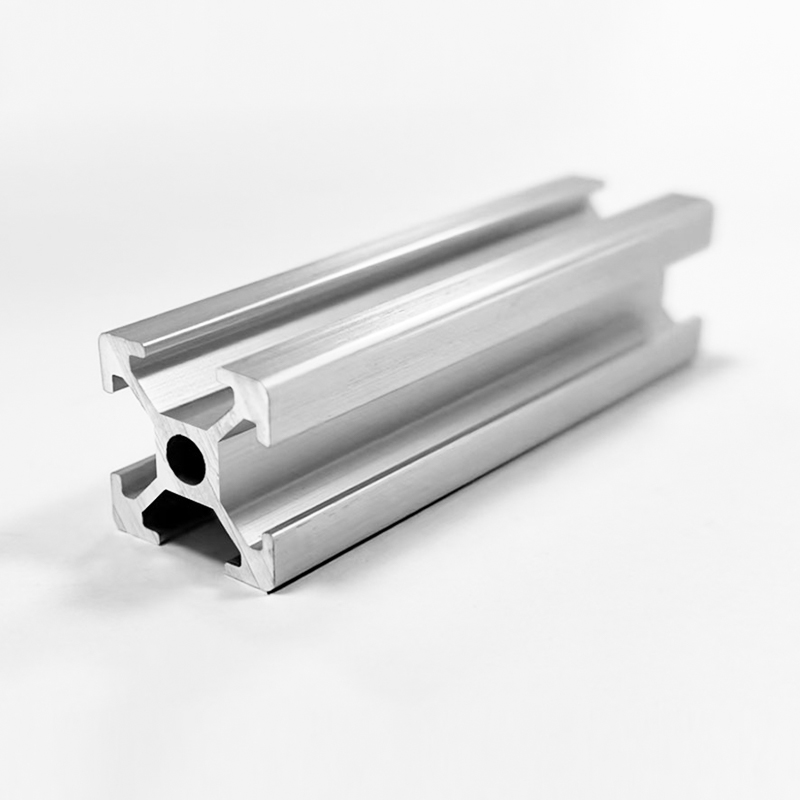
A laboratory bench is the classic case for staying light: a lightweight 3030 profile designed for laboratory framing keeps the bench rigid at standard-duty cost and saves the hard-alloy budget for instruments that genuinely need it.
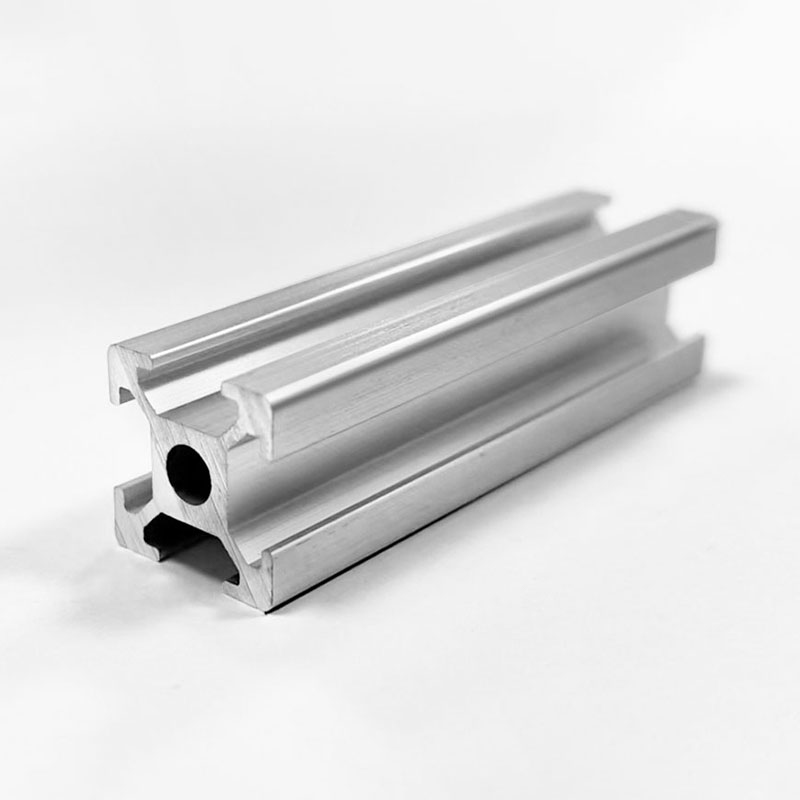
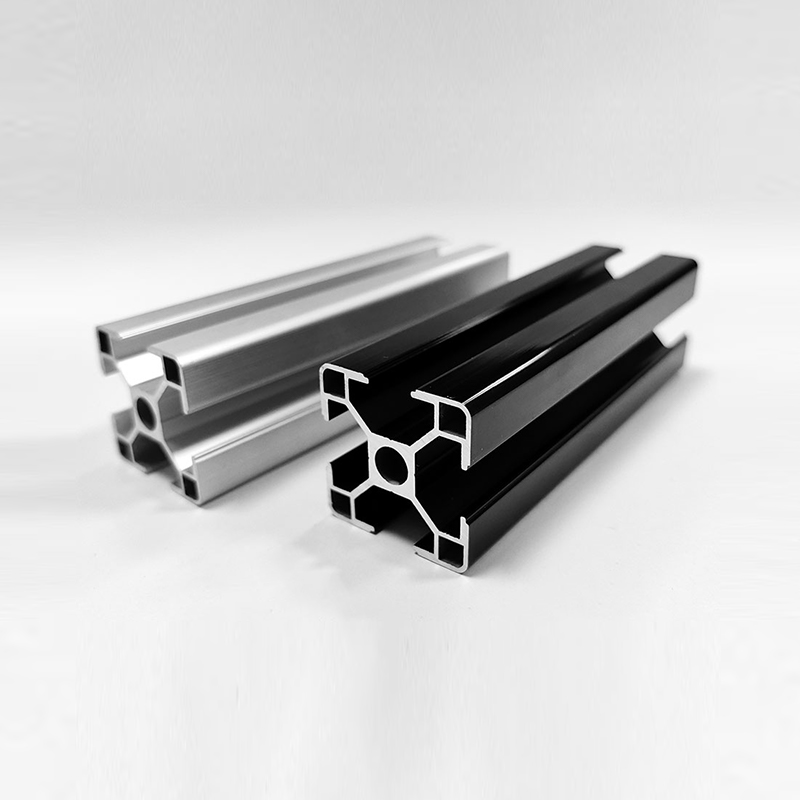 HS-8-3030QL Lightweight 3030 T-Slot Aluminum Profile for Laboratory FramingThis lightweight 3030 extrusion keeps laboratory benches and light structures rigid at standard-duty cost, so the hard-alloy budget can be reserved for framing that genuinely needs higher strength.View Product →
It sits on the soft boundary. 6063 is heat-treatable like the rest of the 6xxx family, but at about 186 MPa tensile it is chosen for finish and shape complexity rather than structure, and most engineering teams treat 6061-T6 as the entry point to hard alloy framing.
About 65 percent higher in tensile strength, 310 versus 186 MPa, and about 90 percent higher in yield strength, 276 versus 145 MPa, which is what allows smaller or thinner sections under the same load.
All aluminum alloys form a protective oxide film, and pure and 5xxx grades do it best. Hard alloys match that performance indoors and when anodized, which is why anodizing is the standard finish on structural profiles.
Yes for sawing, drilling and T-slot assembly, and the higher hardness actually improves machined edge quality. The single caution is welding, where some heat-treatment strength is lost around the joint.

Phone
+86-021-5788 5585
+86-133 8191 2789
Address
No. 218, Zhongde Road, Xiaokunshan Town, Songjiang District, Shanghai, China
Media
