
 English
 Español
hsau hsau hsau hsau hsau
hsau hsau hsau hsau

For North American buyers the imperial figure matters in daily practice: mills quote by the pound, freight carriers price by weight brackets, and CNC shops estimate machining hours from billet weight. The sections below cover the exact alloy values, the conversions worth memorizing, and how density turns into a frame weight you can budget before ordering.
Content
Pure aluminum has a density of 0.0975 lb/in3, and commercial alloys cluster in a narrow band from roughly 0.096 to 0.102 lb/in3. The pure-metal value converts from the internationally referenced 2.70 g/cm3, which equals 168.5 lb/ft3. A face-centered cubic crystal structure and light atoms make aluminum one of the lightest metals that still carries structural load.
Density is the mass of a material per unit volume. For aluminum, engineers quote 0.0975 lb/in3 for the pure metal and apply a small alloy correction of roughly plus or minus 3 percent depending on grade.
Two notes keep the number honest. First, alloying barely moves it: even zinc-rich 7075 at 0.102 lb/in3 sits only about 5 percent above pure aluminum. Second, temper designations such as T5 or T6 change strength through heat treatment, not density, so a 6063-T5 profile and a 6063-T6 profile of the same cross-section weigh the same per meter.
Alloying shifts density by roughly 2 to 6 percent because each dissolved element carries a different atomic mass. Copper at 8.96 g/cm3 and zinc at 7.14 g/cm3 are far heavier than aluminum and push 2024 and 7075 to the top of the range. Magnesium at 1.74 g/cm3 and silicon at 2.33 g/cm3 are lighter, which is why 5xxx and 6xxx grades sit at or slightly below the pure-metal baseline.
| Alloy | Density (g/cm3) | Density (lb/in3) | Density (lb/ft3) | Typical use |
| 1100 | 2.71 | 0.098 | 169.2 | General sheet and chemical equipment |
| 2024 | 2.78 | 0.100 | 173.6 | Aircraft structures and rivets |
| 3003 | 2.73 | 0.099 | 170.4 | HVAC ducting and general fabrication |
| 5052 | 2.68 | 0.097 | 167.3 | Marine and corrosion-prone environments |
| 6061 | 2.70 | 0.0975 | 168.5 | Structural plates and machined parts |
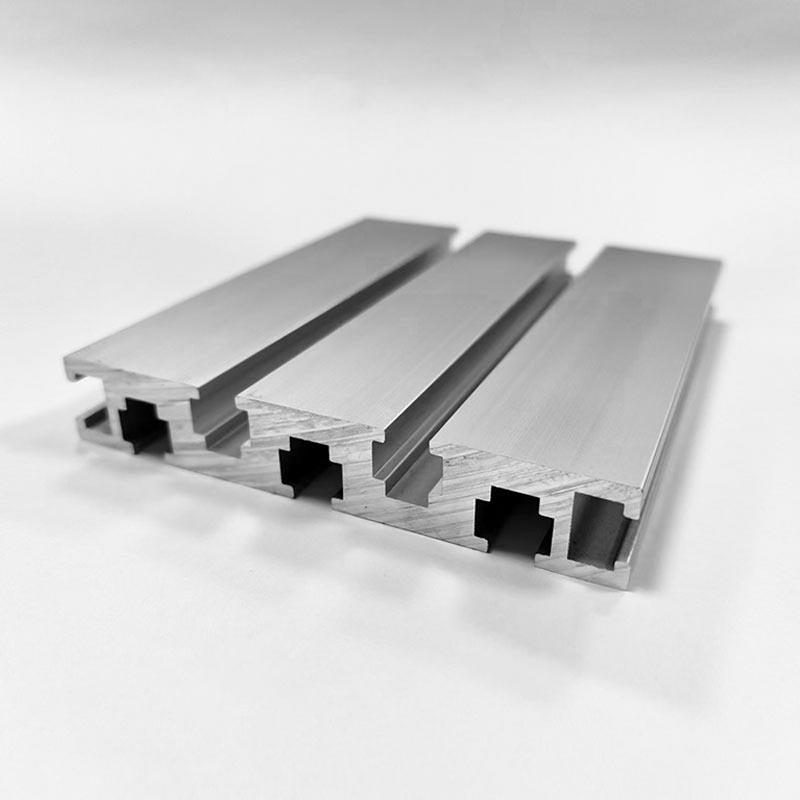
| 6063 | 2.69 | 0.097 | 167.9 | T-slot profiles and architectural extrusions |
| 7075 | 2.81 | 0.102 | 175.4 | High-strength aerospace components |
For industrial framing, the row that matters is 6063 at 0.097 lb/in3, the workhorse alloy behind most T-slot systems. Choosing between 6061 and 6063 affects wall design and surface finish far more than weight, a distinction this technical comparison of 6061 and 6063 profile selection covers in depth.
Practical takeaway: for quoting purposes, 0.0975 lb/in3 is accurate within 3 percent for every 6xxx-series profile. Only when a design mixes in 7075 machined fittings or 5052 sheet should the alloy-specific value replace the baseline.
To convert aluminum density from g/cm3 to lb/in3, multiply by 0.036127, so 2.70 g/cm3 becomes 0.0975 lb/in3. The reverse conversion multiplies lb/in3 by 27.68. These factors cover most cross-checks between metric datasheets from Asian extruders and imperial quotations from North American distributors.
Master reference: 2.70 g/cm3 = 2,700 kg/m3 = 168.5 lb/ft3 = 0.0975 lb/in3. Keep this chain on the shop wall and any datasheet in any unit system can be verified in seconds.
Profile weight equals volume multiplied by density, and constant cross-section extrusions simplify that to cross-section area multiplied by length multiplied by 0.0975 lb/in3. When a datasheet is missing, the drawing alone is enough.
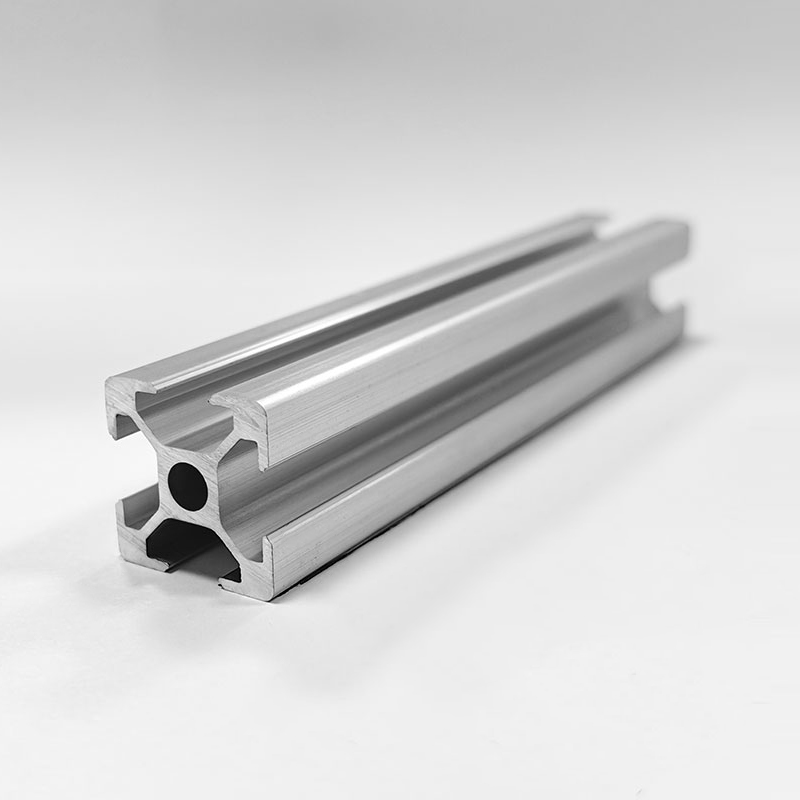
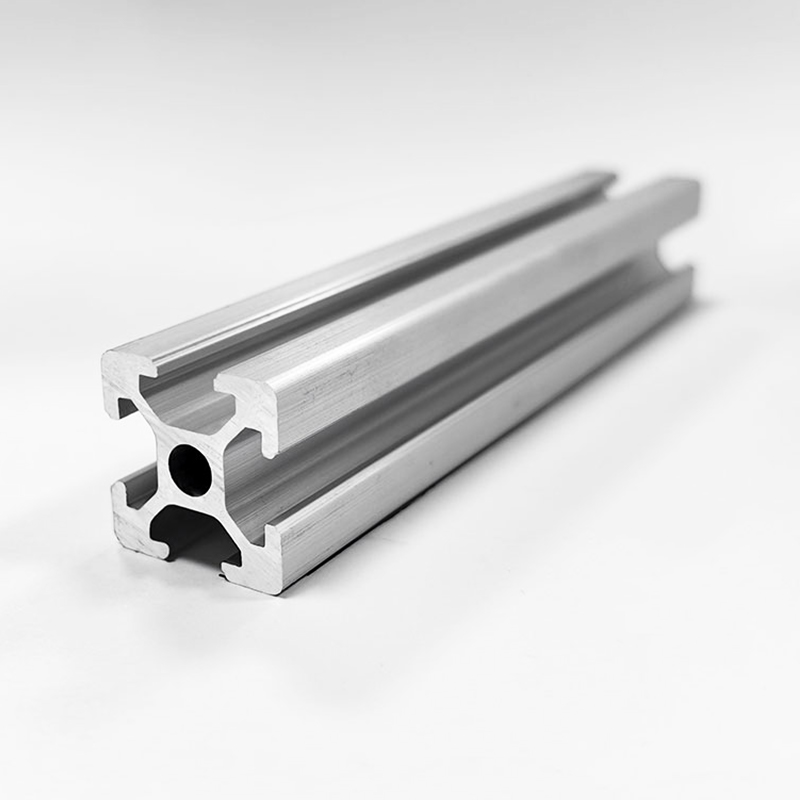
Field formula: weight in kg per meter = cross-section area in mm2 x 2.70 / 1,000. A 40x40 profile with roughly 460 mm2 of solid aluminum works out to about 1.24 kg/m, or 0.83 lb/ft, before opening a catalog.
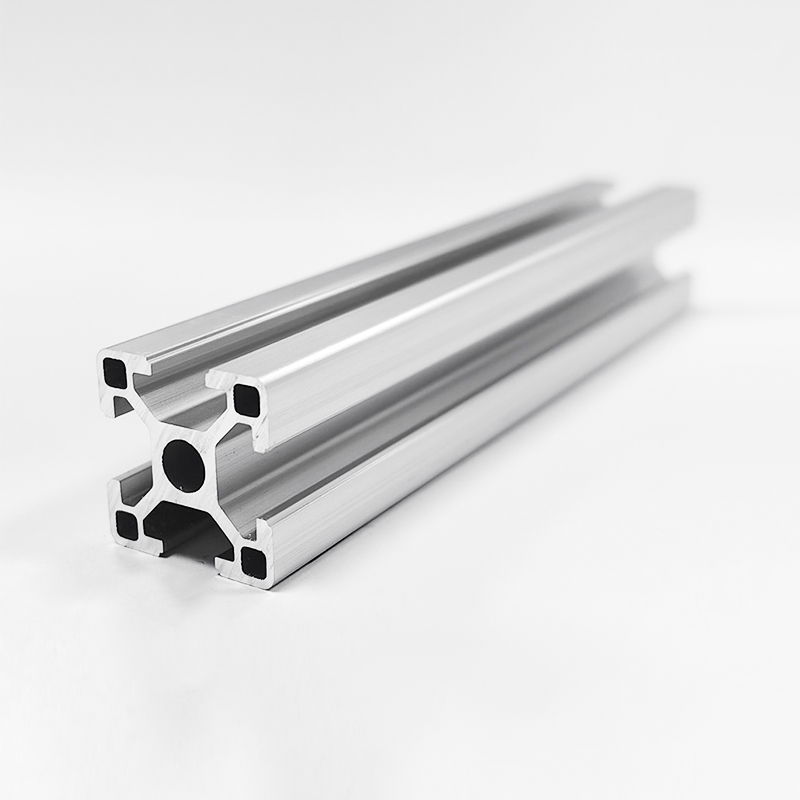
Reputable extruders publish weight per meter, computed directly from density and cross-section. A high-stability 3030 profile such as the HS83030N3 lists 1.02 kg/m, which already contains the 2.70 g/cm3 assumption.
Multiply kg/m by 2.2046 for lb/m, then divide by 3.281 for lb/ft. The 1.02 kg/m profile works out to 0.685 lb/ft.
A frame using 24 meters of this profile carries 24 x 1.02 = 24.5 kg, which is 54 lb of bare extrusion.
Corner connectors, fasteners, and leveling feet typically add 5 to 8 percent, taking the frame to roughly 58 lb before packaging.
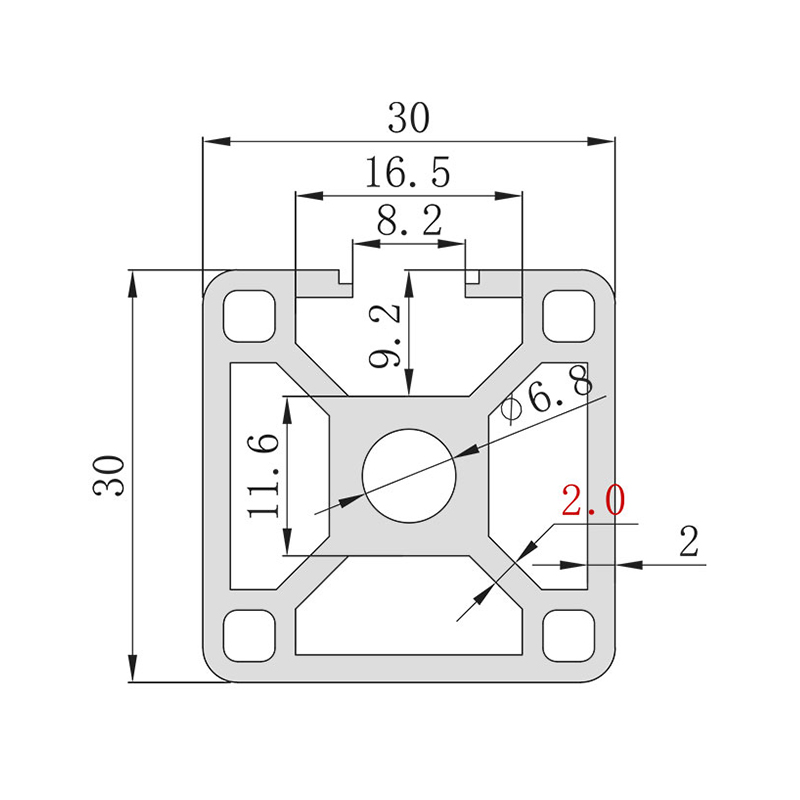 HS-8-3030N3 3030 T-Slot Aluminum Profile, 2.0mm Wall, 1.02kg/mThis high-strength 6063-T5 profile suits frames where load capacity matters despite aluminum's low density. Its 2.0mm walls and 8.2mm T-slot allow modular, weld-free assembly for automation equipment frames and heavy shelving.View Product →
Aluminum runs about one third the density of steel, 0.098 versus 0.284 lb/in3, so a well-designed aluminum frame cuts structural weight by 40 to 50 percent even after compensating with thicker sections. Titanium at 0.160 and copper at 0.321 bracket the aluminum line from above, while only magnesium at 0.063 sits lighter.
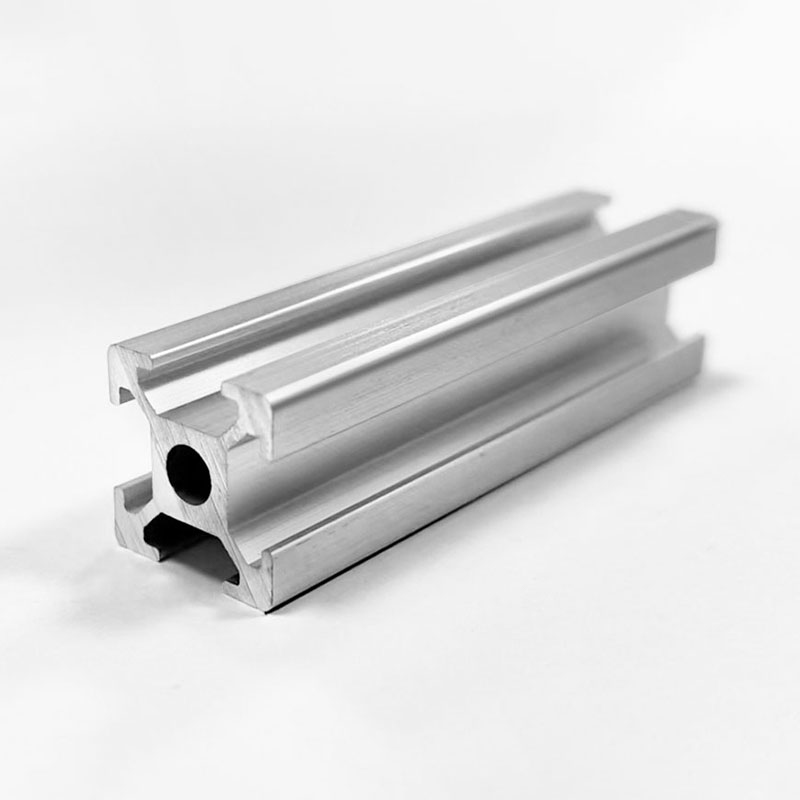
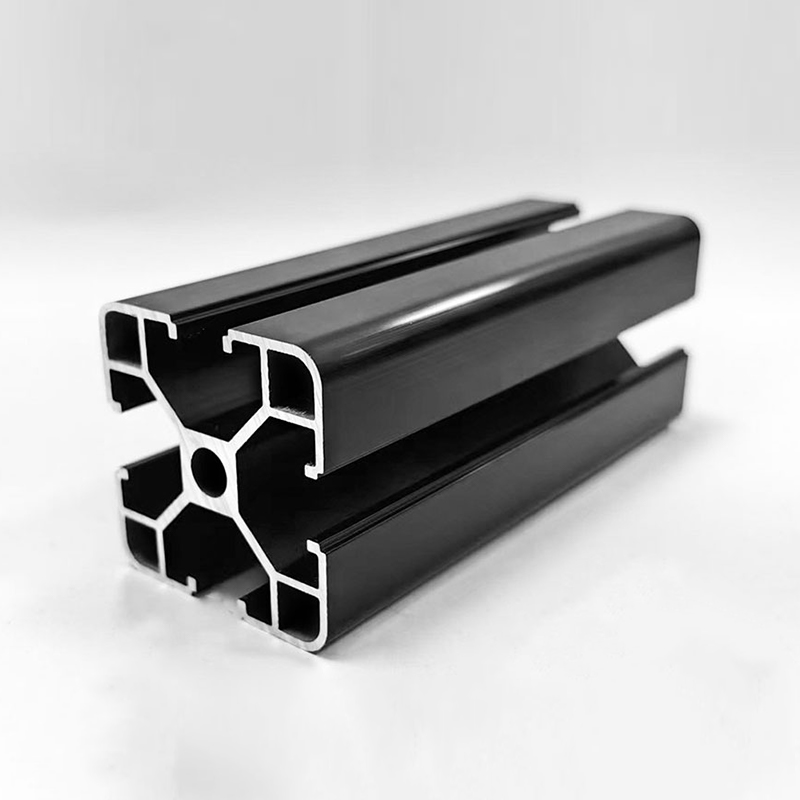 HS-8-4040L Lightweight 4040 T-Slot Aluminum Profile, 0.90kg/mWith a 1.5mm wall and 0.90kg/m unit weight, this 40x40 extrusion prioritizes weight savings. It fits the article's density discussion well, offering a practical option for cleanroom partitions, fencing, and lightweight modular workstations.View Product →
Treat density-driven weight as a single budget line covering structure, hardware, and shipping, because the same 0.0975 lb/in3 constant drives all three.
Wall thickness is the biggest lever inside one series. Across a single 40x40 family, variants commonly run from 1.2 mm walls on weight-optimized versions to 4.5 mm walls on extra-heavy-duty versions, a spread of more than 50 percent in weight per meter for the same outer footprint. Suppliers such as Shanghai Huishuo Aluminum Industry Technology Co., Ltd. publish the per-meter weight for every variant, which is simply density multiplied by the measured cross-section, and you can compare how each series trades weight against load rating across the full industrial aluminum extrusion profiles range.
A worked shipping example: 18 meters of 30x60 square-slot profile at 1.70 kg/m comes to 30.6 kg, or 67.5 lb, of bare extrusion. Adding plates and fasteners at 7 percent lands the frame near 72 lb, which keeps it under the 150 lb threshold where many carriers apply additional handling fees.
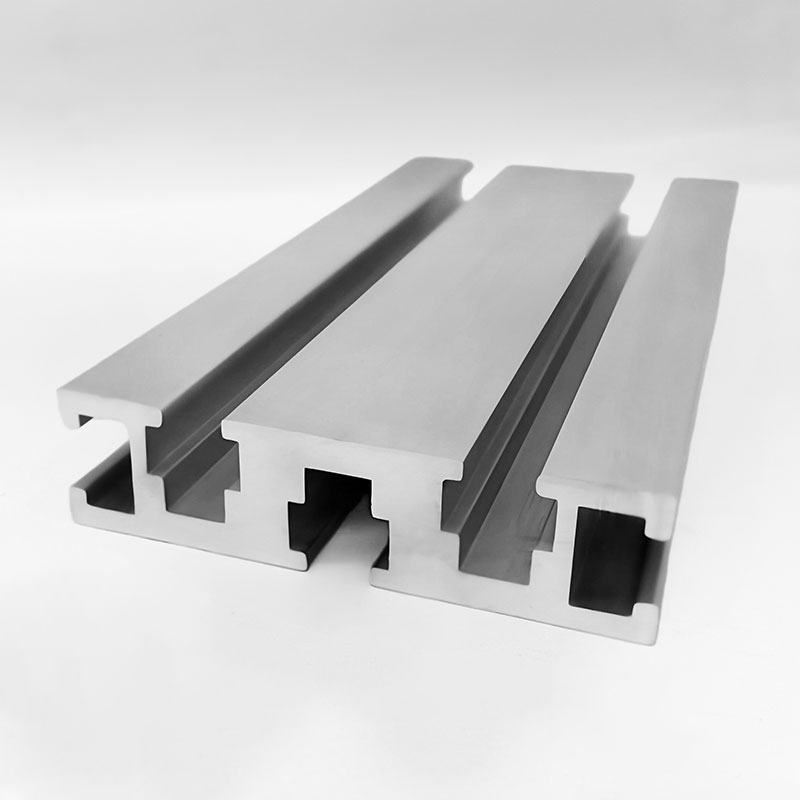
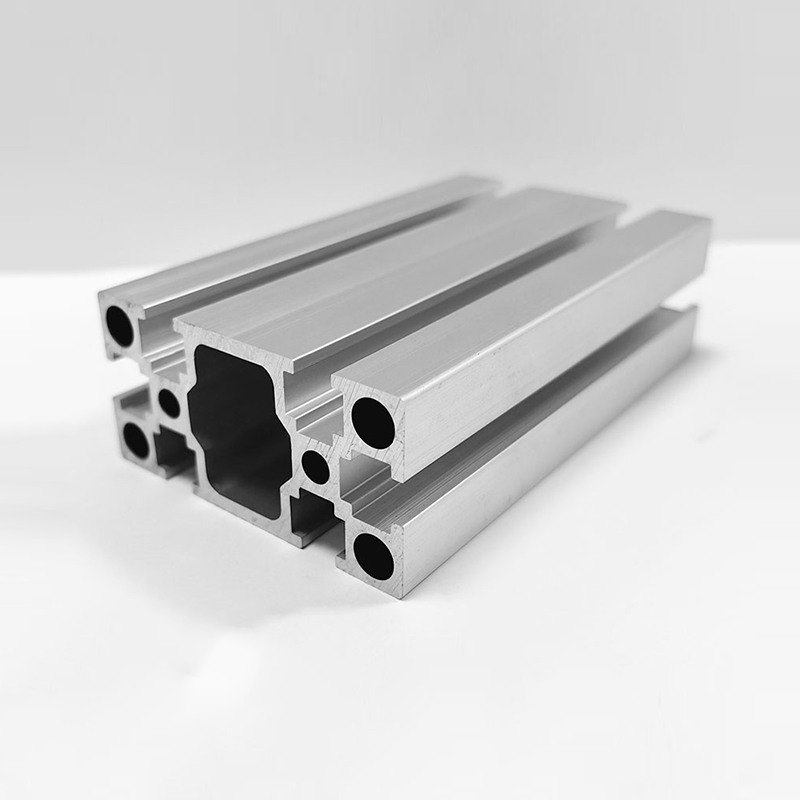 HS-6-3060GB 30x60 Square Slot Aluminum Profile, 1.70kg/mAn asymmetric 30x60mm profile with 6.5mm square slots for dedicated connectors, rated for medium and heavy frames. Its 1.70kg/m weight and 2.0mm walls suit shelves, assembly line supports, and workshop fencing projects.View Product →
The accepted value is 0.0975 lb/in3 at room temperature, converted from the reference density of 2.70 g/cm3, or 2,700 kg/m3. In everyday quoting, 0.098 lb/in3 is the common rounded figure and stays within 1 percent of the exact value.
No. T4, T5, and T6 tempers alter strength through precipitate structure, and the density shift is below half a percent. Heating the metal in service expands it slightly, so density falls by roughly 1 percent at 200 degrees Fahrenheit, but datasheet values assume room temperature.
Multiply any g/cm3 figure by 0.036127. For 6063 at 2.69 g/cm3 that gives 0.097 lb/in3; for 7075 at 2.81 g/cm3 it gives 0.102 lb/in3. If the datasheet lists kg/m3, multiply by 0.0000361 instead.
Geometry, not the metal. All 6xxx alloys fall between 0.097 and 0.0975 lb/in3, so a 15 percent weight difference between two 40x40 profiles comes from wall thickness and interior rib design. Always compare the published kg/m or lb/ft figure rather than assuming equal weight at equal footprint.

Phone
+86-021-5788 5585
+86-133 8191 2789
Address
No. 218, Zhongde Road, Xiaokunshan Town, Songjiang District, Shanghai, China
Media
