
 English
 Español
hsau hsau hsau hsau hsau
hsau hsau hsau hsau

Two purchase orders for the same 4040 T-slot profile can specify different metals: one buyer writes 6063-T5, another insists on 6061-T6, and the gap between the two quotes often reaches 10 to 20 percent. That difference is not paperwork. Among aluminum alloy types, the grade you pick decides how much load a frame carries, how cleanly it anodizes, and whether a CNC shop can hold tolerance on the finished part. This guide breaks the four-digit series system into plain terms, compares the grades that actually appear on industrial spec sheets, and ends with five checks that verify an alloy claim before a purchase order is signed.
Content
The first digit of every wrought aluminum alloy code names its primary alloying element, and that single digit predicts most of what a buyer needs to know: the strength ceiling, corrosion behavior, weldability, and whether the metal responds to heat treatment. Aluminum alloys split into two principal classifications, wrought and cast. Wrought alloys are rolled, extruded, or forged and carry the plain four-digit code; cast alloys add a decimal point, such as A356.0, and dominate molded shapes rather than profiles. Industrial T-slot framing lives almost entirely in the wrought 6xxx family.
| Series | Leading element | Character | Typical products |
| 1xxx | None, 99.0 percent aluminum minimum | Softest, best corrosion resistance and conductivity | Busbars, foil, chemical linings |
| 2xxx | Copper | High strength, lower corrosion resistance, heat-treatable | Aircraft fittings, structural parts |
| 3xxx | Manganese | Good formability, moderate strength | Beverage cans, HVAC components |
| 4xxx | Silicon | Low melting point | Welding wire, brazing sheet |
| 5xxx | Magnesium | Strong and weldable, strain-hardened | Marine plate, tankers, guards |
| 6xxx | Magnesium and silicon | Balanced strength, extrudable, heat-treatable | T-slot profiles, CNC stock, frames |
| 7xxx | Zinc | Highest strength, fatigue resistant | Aerospace structures, molds |
| 8xxx | Other elements | Specialty grades | Foil stock, electrical conductors |
Cast alloys mirror the same logic in the 1xx.x to 8xx.x ranges, but extruded machine-frame profiles come from the wrought system above.
Two bars with identical chemistry can differ in yield strength by close to 50 percent, because the letters after the dash describe the processing route rather than the metal itself. For 6063, the T5 temper yields at about 145 MPa while T6 reaches about 214 MPa. The gap comes from heat, not chemistry.
Temper designations work in four broad groups. F means as-fabricated, O means annealed and soft, H marks strain-hardened metal that gains strength from cold work, and T marks heat-treated metal that gains strength from precipitation hardening. T5 is the extrusion-friendly route: the profile cools at the press and is then artificially aged, which keeps cost down on long profile runs. T6 requires a separate solution treatment and quench, which pushes strength higher. Non-heat-treatable families such as 3xxx and 5xxx use H tempers instead, where H32 means strain hardened and thermally stabilized.
On ultimate tensile strength, commercial-purity 1100-O sits near 90 MPa, the workhorse 6xxx grades span roughly 186 to 310 MPa, and aerospace-grade 7075-T6 peaks around 572 MPa, close to six times the strength of pure aluminum. The chart below uses typical handbook values for each alloy and temper.
Strength alone does not settle the choice. The 7xxx grades trade corrosion resistance and weldability for strength, which is why they live in aerospace rather than factory framing. The 5xxx grades weld beautifully and resist saltwater but cannot be heat treated, so their strength plateaus. The 6xxx family wins on balance: solid strength, excellent extrudability, clean anodizing, and full weldability.
For industrial framing, guarding, and machine bases, 6xxx alloys are the default choice. Most commercial T-slot profiles, including the ranges produced by Shanghai Huishuo Aluminum Industry Technology Co., Ltd., are extruded from 6063-T5, because the alloy flows readily into thin, complex sections and takes a bright, even anodized finish. 6061-T6 takes over where CNC plates, brackets, and loaded joints need its higher strength and better machinability.
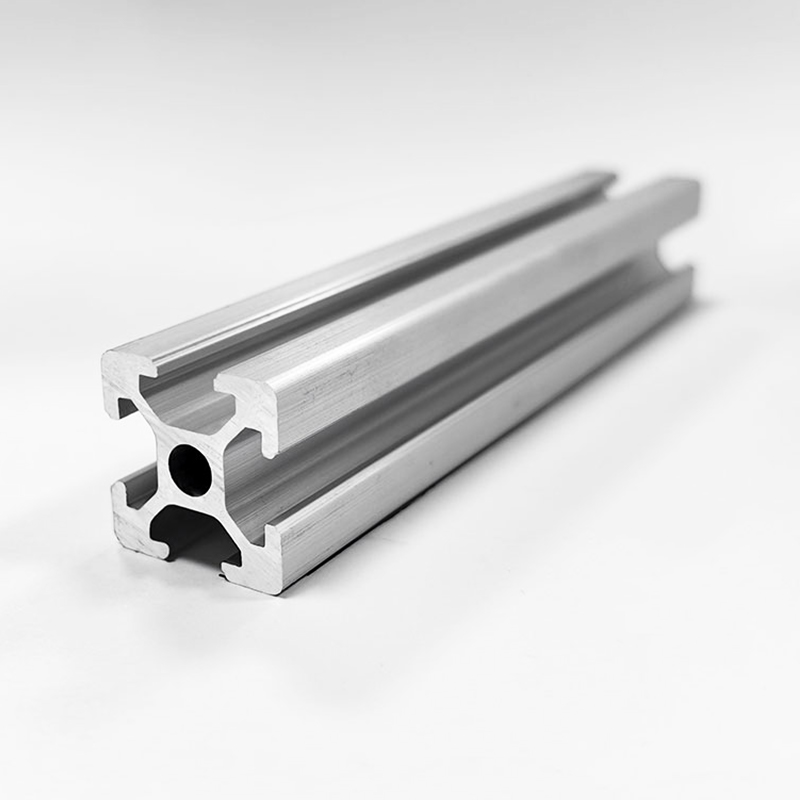
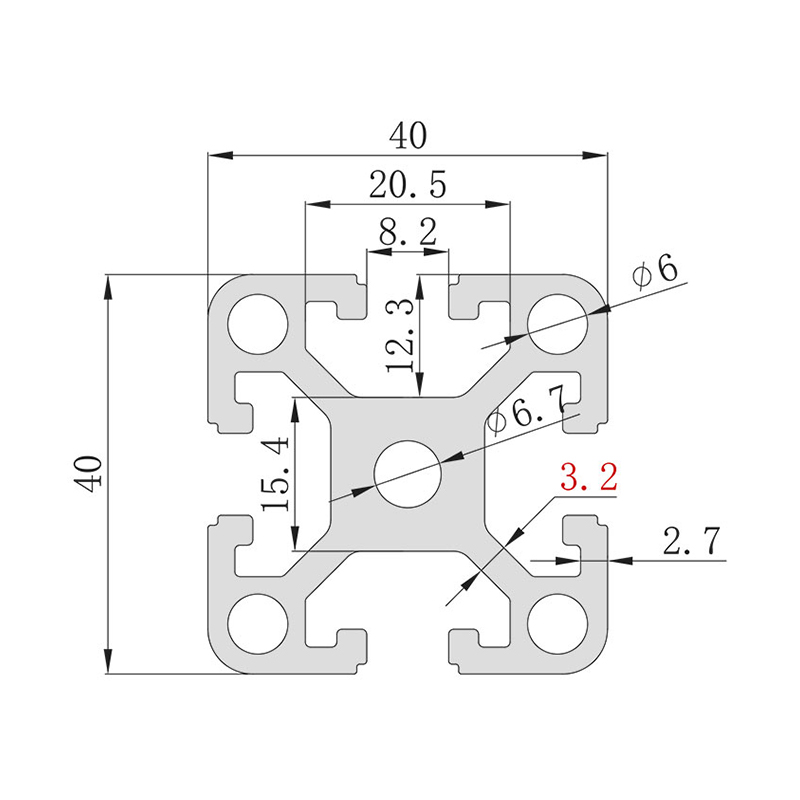 HS-8-4040D High-Strength 4040 T-Slot Aluminum ProfileThis 6063-T5 profile uses a 3.2mm thickened wall within the 4040 family's thickness range, making it a fitting choice for the heavy frames and machine bases discussed, with no pre-drilled holes for flexible assembly.View Product →
Within a single alloy, engineers tune capacity through geometry rather than chemistry. The 4040 family spans wall thicknesses from 1.2 mm in ultra-thin variants to 4.5 mm in extra-heavy-duty versions, which shifts load capacity without changing the alloy. Weight-optimized sections follow the same logic in reverse, serving laboratory frames and light guards where every kilogram counts.
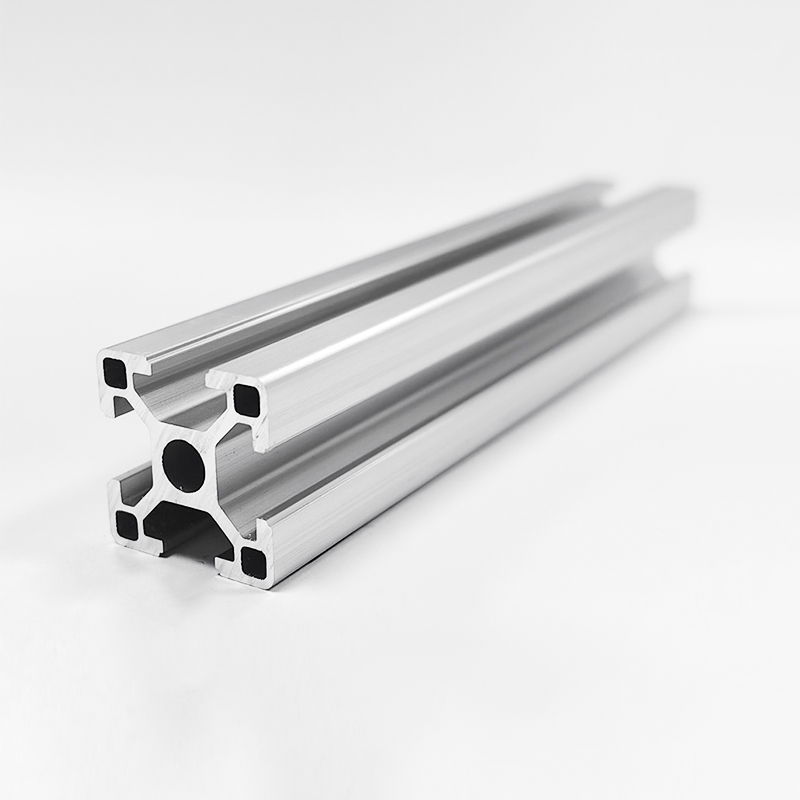
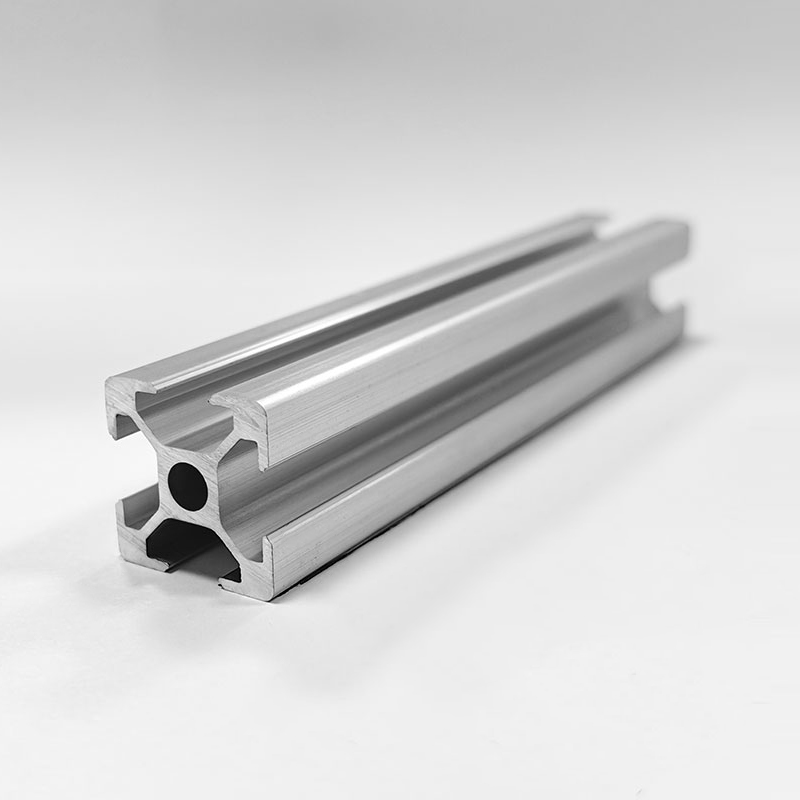
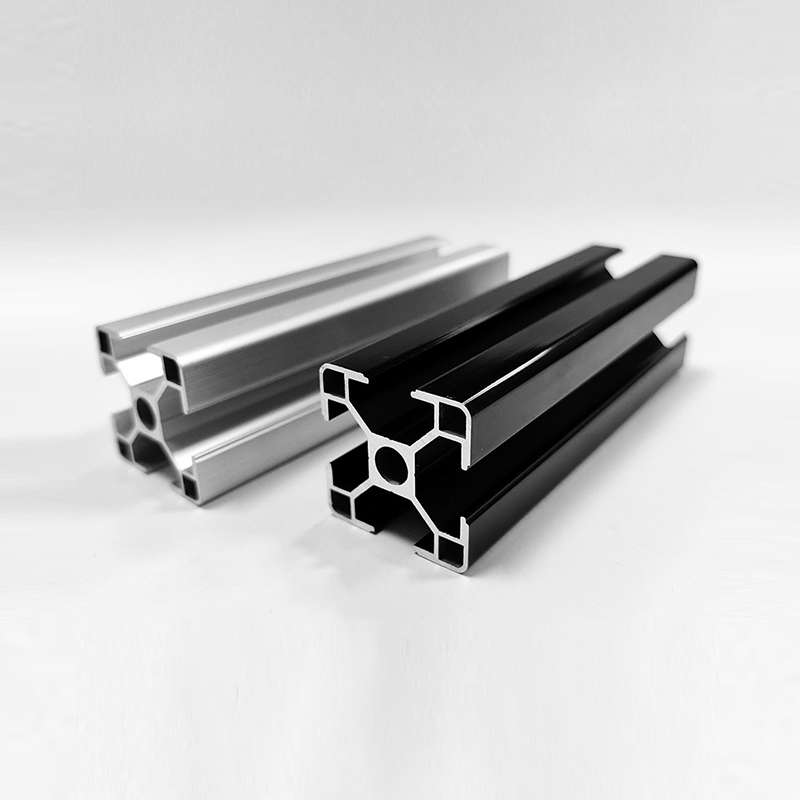 HS-8-3030QL Lightweight 3030 T-Slot Aluminum Extrusion ProfileWith a 1.4mm wall and 0.58kg/m weight, this 30x30mm profile sits at the light end of geometry-based capacity tuning, matching the laboratory frames and light guards described where weight savings matter most.View Product →
The chemistry gap between 6061 and 6063 is small on paper but consequential in production, so it deserves a dedicated comparison; one is available in this technical breakdown of the two aluminum alloy types extrusion buyers weigh most often.
| Job | Usual alloy | Why it wins |
| Machine frames, workstations, guarding | 6063-T5 | Extrudable, even anodizing, cost-efficient |
| CNC plates, brackets, fixtures | 6061-T6 | Higher strength, good machinability |
| Marine and chemical environments | 5052-H32 | Saltwater corrosion resistance, weldable |
| High-stress structural and aerospace parts | 7075-T6 | Highest strength-to-weight ratio |
| Foil, busbars, chemical equipment | 1100 or 3003 | Purity, conductivity, formability |
When a point load exceeds what a standard wall can carry, or a design demands a cross-section no catalog contains, the practical answer is a larger series or a dedicated mold rather than a different alloy. Extra-heavy-duty 9090 and 120120 profiles carry loads that sit far beyond the 4040 range, while a custom extrusion die turns a unique section into a repeatable, orderable product.
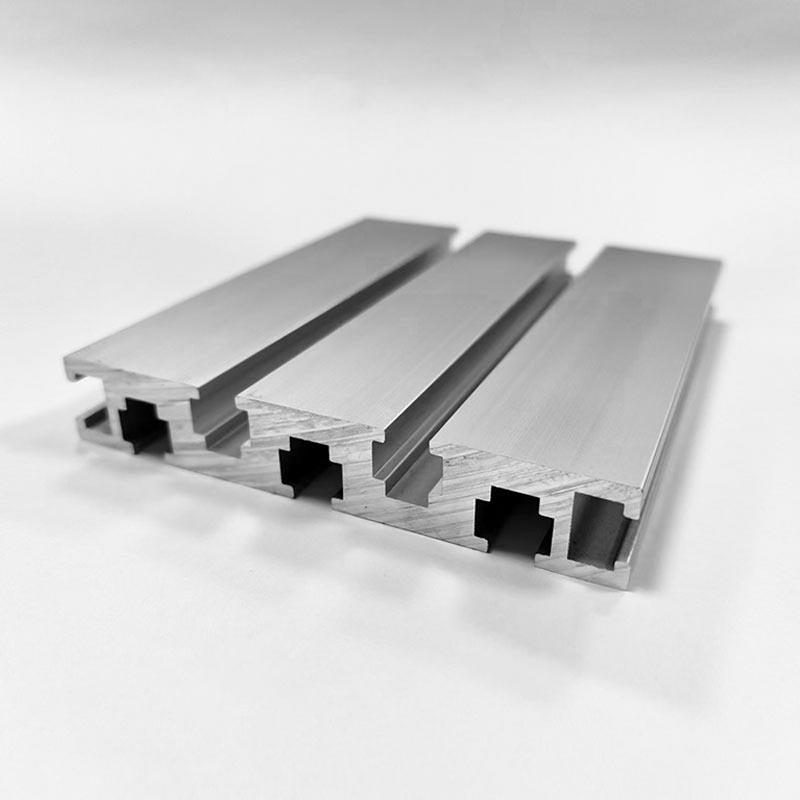
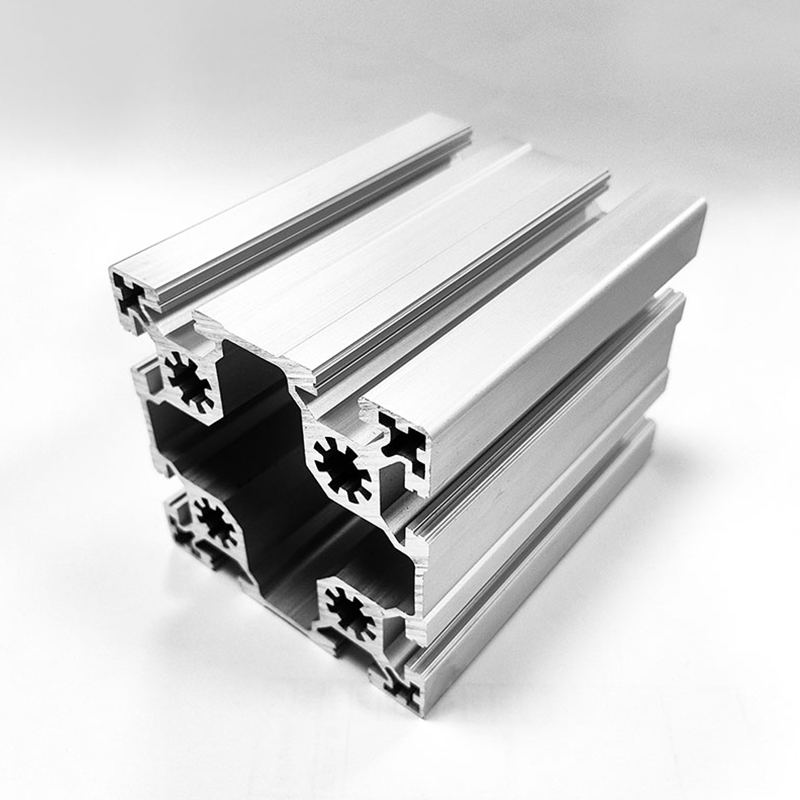 HS-10-9090W Extra Heavy-Duty 9090 T-Slot Aluminum ProfileFor point loads beyond what 4040 profiles carry, this 90x90mm extrusion with a 5.4mm reinforced wall offers welding-free, modular high-load framing, illustrating the extra-heavy-duty series referenced for demanding industrial structures.View Product →
A supplier's alloy claim can be tested with five practical checks, none of which requires a full laboratory. Run them on first articles, then on random samples from volume production.
The wrought system has eight series, 1xxx through 8xxx. Industrial equipment work concentrates on 5xxx and 6xxx: 6063-T5 for T-slot profiles, 6061-T6 for machined and structural parts, and 5052-H32 for sheet guards and marine environments. 2xxx and 7xxx serve aerospace, while 1100 and 3003 cover foil, busbars, and chemical equipment.
For most frames, guarding, and workstations, yes. 6063-T5 yields at about 145 MPa, and frame deflection usually depends on section size and span more than on alloy strength. For concentrated heavy loads, move to a thicker wall in the same series or step up to an extra-heavy-duty 8080 or 9090 profile before switching alloys.
The cooling and aging route. T5 cools at the extrusion press and is then artificially aged; T6 receives a full solution treatment and quench before aging. On 6063, that difference lifts minimum yield strength from about 145 MPa to about 214 MPa, roughly a 45 to 50 percent gain, at a higher processing cost.
Commercially pure 1xxx grades and the 5xxx magnesium grades lead, with 5052 a standard choice for saltwater exposure. 6xxx alloys resist corrosion well and hold up outdoors when anodized. Avoid relying on bare 2xxx or 7xxx in wet or saline environments, since their copper and zinc content makes them the least corrosion-resistant structural families.

Phone
+86-021-5788 5585
+86-133 8191 2789
Address
No. 218, Zhongde Road, Xiaokunshan Town, Songjiang District, Shanghai, China
Media
