
 English
 Español
hsau hsau hsau hsau hsau
hsau hsau hsau hsau

When a machine frame is built with 6061-T6 aluminum extrusion, the number that predicts the first permanent bend is the aluminum yield strength, not the tensile strength. In the T6 temper, 6061 has a typical yield strength of 276 MPa, so a structural member starts to take a set near that stress, well before the 290 MPa tensile rating is reached.
This matters in t-slot framing because most joints and beams are designed to stay elastic. If an engineer sizes a span with only the ultimate tensile strength, the frame can permanently sag long before it fractures. Yield strength is the practical design limit for load-bearing aluminum structures.
Content
Aluminum yield strength is the stress at which the material begins to deform plastically, expressed in MPa or ksi. Because aluminum has no sharp yield point, engineers use the 0.2% offset proof stress.
0.2% offset proof stress is the stress that produces a permanent plastic strain of 0.2% after the load is removed. It is the accepted definition of yield strength for aluminum alloys.
A simple example: a 6061-T6 profile with a yield strength of 276 MPa can be loaded to 180 MPa and return to its original shape with a comfortable margin. At 250 MPa, the margin is thin and local stress concentrations at slot edges can push the material past yield.
The practical consequence is that yield strength, not hardness or tensile strength, should drive the first pass of profile selection for industrial frames, workstations, enclosures, and linear motion structures.
Typical yield strength for common extruded aluminum alloys ranges from 34 MPa for 1100-O to 503 MPa for 7075-T6. The table below collects values you will find in supplier datasheets and mill certificates.
| Alloy and temper | Yield strength (MPa) | Yield strength (ksi) | Typical application |
| 1100-O | 34 | 5 | Trim, nameplates, chemical equipment |
| 3003-H14 | 145 | 21 | Heat exchangers, storage tanks |
| 5052-H32 | 193 | 28 | Marine panels, fuel tanks |
| 6063-T5 | 110 | 16 | Architectural frames, rails |
| 6063-T6 | 214 | 31 | Light structural frames |
| 6061-T6 | 276 | 40 | Machine frames, jigs, heavy-duty profiles |
| 7075-T6 | 503 | 73 | Aerospace, high-stress parts |
Typical yield strength values from the table above, plotted on a common scale.
For light guards and partitions, 6063-T5 is enough. For structural columns and beams, 6061-T6 is the common default. When the frame must carry higher service loads, a high-strength 3030 t-slot profile is often the smallest section that works without moving to a larger series.
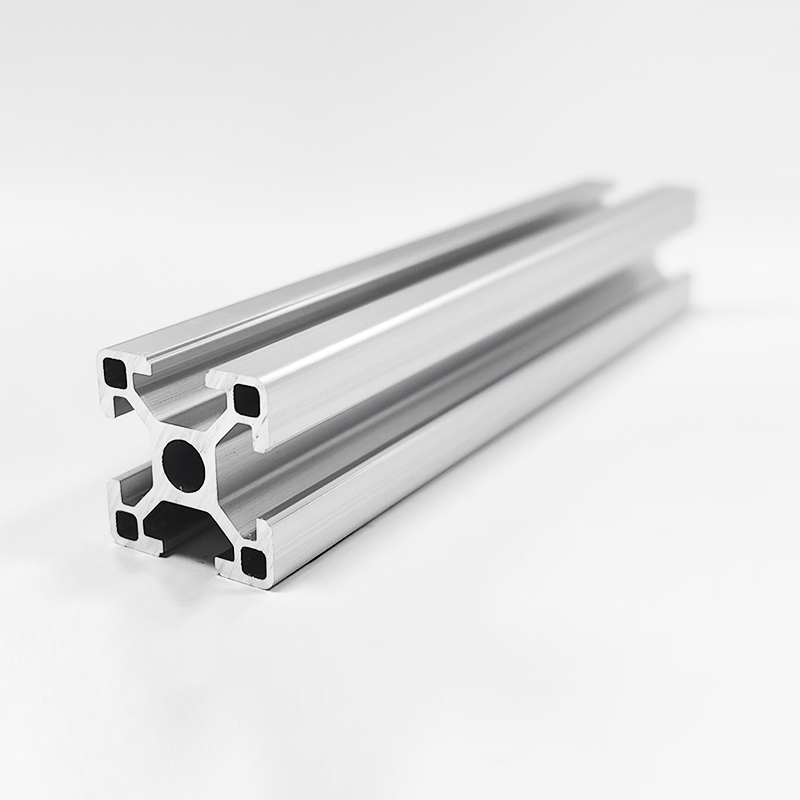
 HS-8-3030A High-Strength 3030 T-Slot Aluminum Profile with 2.0mm WallThis 30x30mm profile uses a thickened 2.0mm wall to improve load capacity for structural frames. It suits applications requiring higher strength than standard light guards, while staying in the compact 3030 series.View Product →
For t-slot framing, the practical choice is almost always between 6061-T6 and 6063-T6. 6061 offers higher yield strength and better machined edges; 6063 offers a smoother surface and easier extrusion of thin or complex sections.
For a bolted joint on a machine column, 6061's higher yield strength reduces the risk of the slot teeth indenting under preload. If the part is an enclosure with an anodized finish, 6063 is easier to extrude in thin-wall sections and produces a more uniform surface. For column loads above roughly 25 kN, a heavy-duty 6061 profile with a thicker wall is the safer starting point.
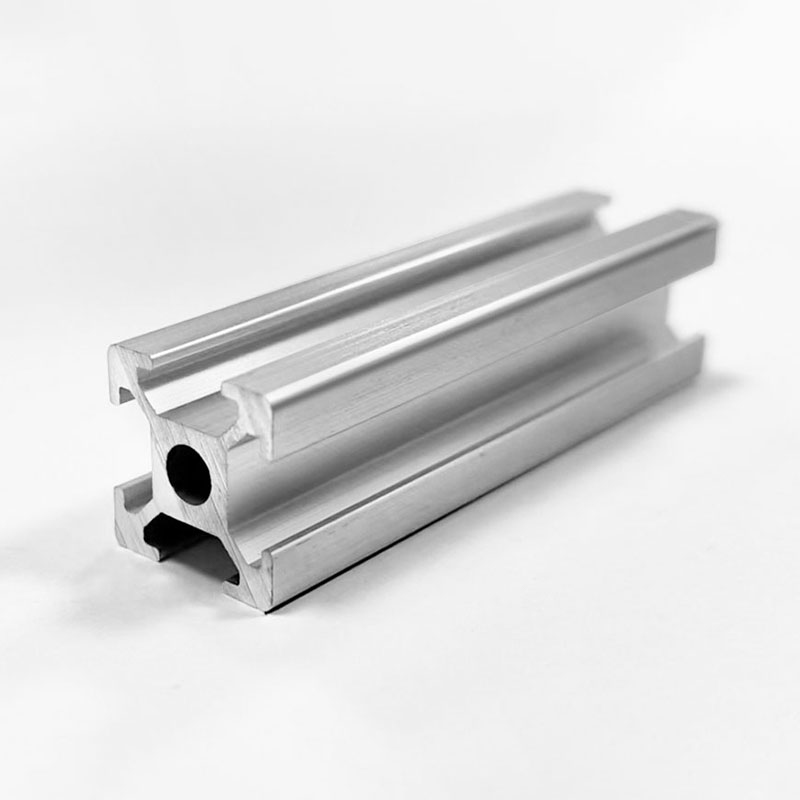
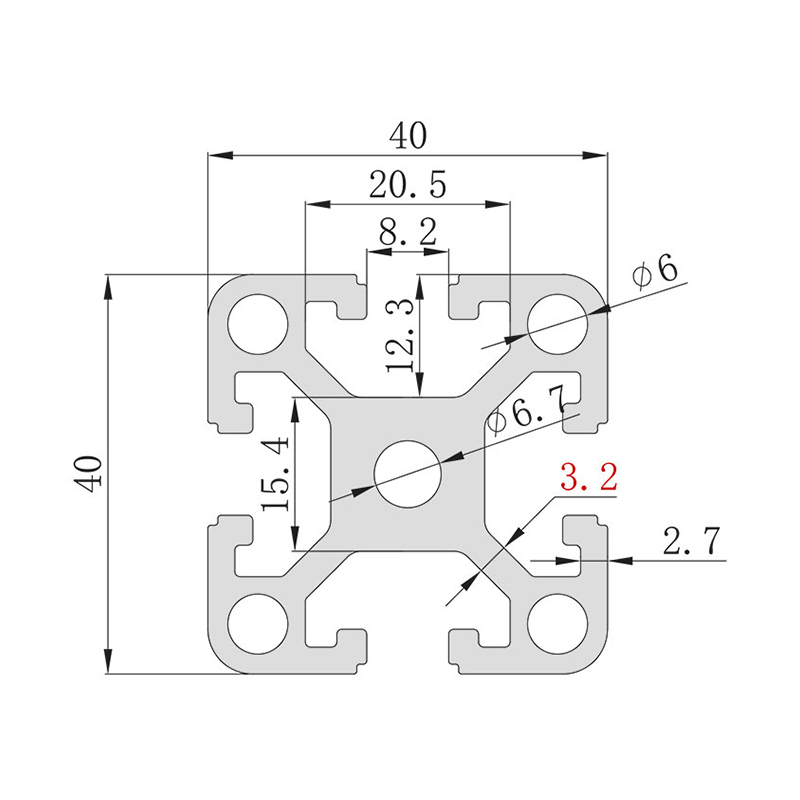 HS-8-4040D Heavy-Duty 4040 T-Slot Profile with 3.2mm Thickened WallWith a 3.2mm wall and no pre-drilled holes, this 40x40mm profile provides flexible drilling and tapping for custom connectors. It is a strong option for heavy frames where higher stiffness is needed than lighter sections.View Product →
After the alloy is fixed, temper has the largest effect on yield strength, followed by cold work, temperature, and cross-section shape. The base alloy sets the ceiling; processing sets the actual value.
Design rule: Use the minimum yield strength from the temper specification, and then apply a separate check for buckling on thin-walled t-slot profiles.
When you buy aluminum extrusions for a load-bearing frame, use the minimum yield strength from the mill certificate, not the typical value from a marketing page.
Suppliers such as Shanghai Huishuo Aluminum Industry Technology Co., Ltd. list section weight, temper, and surface finish on each profile page, which makes it easier to compare yield-strength assumptions before ordering custom lengths. At the top of the standard extrusion range, an extra-heavy 90 x 90 profile is often the last standard section selected before a custom mold becomes justified.
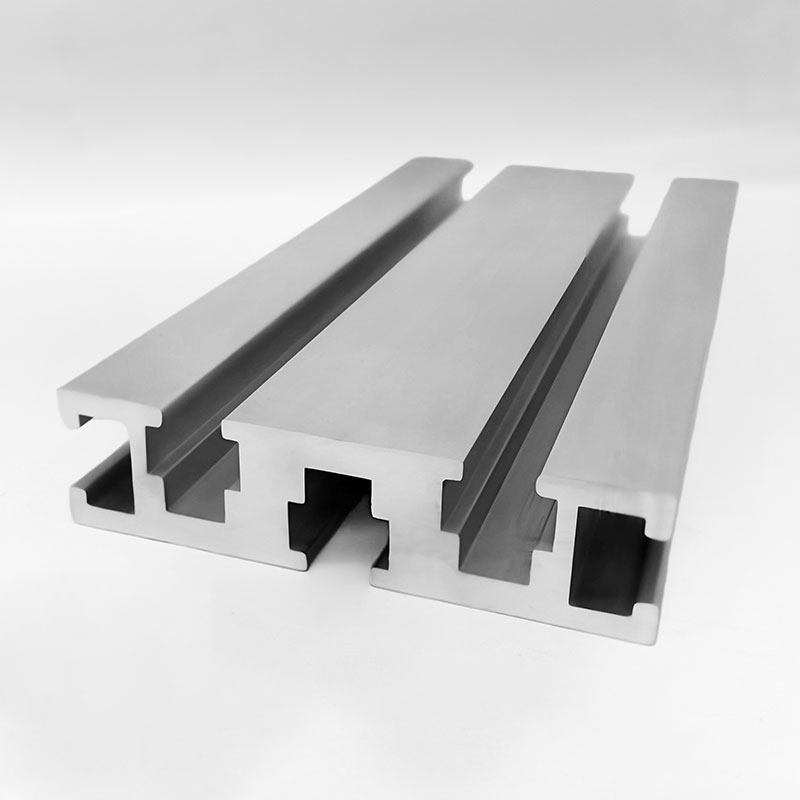
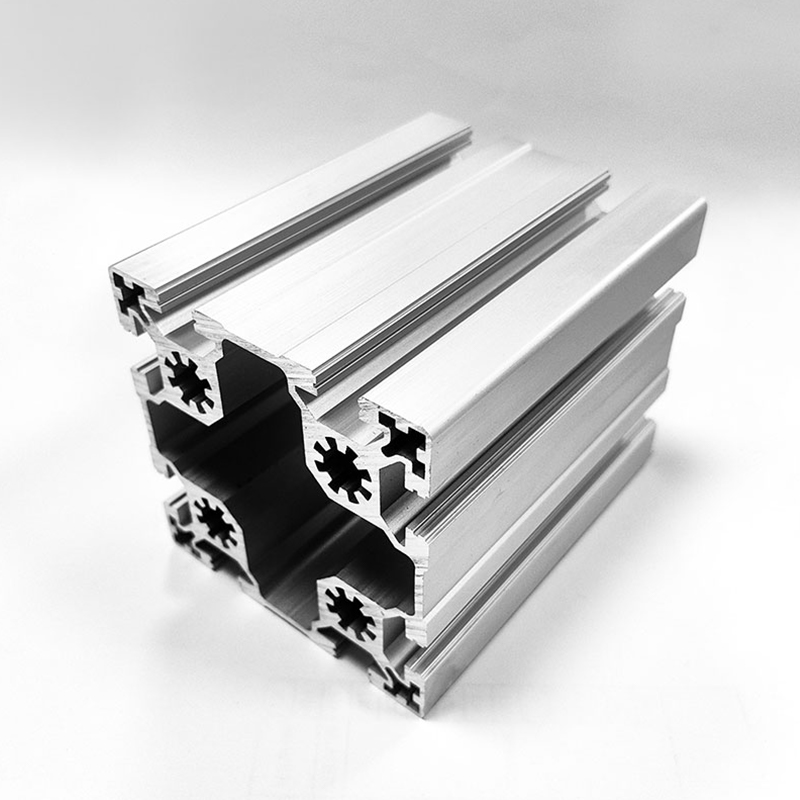 HS-10-9090W Extra Heavy-Duty 9090 T-Slot Extrusion with 5.4mm WallThis 90x90mm profile features a reinforced 5.4mm wall for maximum rigidity under high loads. It is positioned as the top standard extrusion before custom molds, ideal for demanding industrial framing with minimal deflection.View Product →
In the T6 temper, 6061 has a typical yield strength of 276 MPa and a minimum yield strength of 240 MPa. In the annealed O temper, it drops to about 55 MPa.
6063-T6 has a typical yield strength of about 214 MPa, while 6063-T5 is around 110 MPa. 6063 is generally weaker than 6061 but easier to extrude with a better surface finish.
Yes. For 6xxx alloys, solution heat treatment followed by artificial aging increases yield strength dramatically. T6 tempers typically provide 40-60% higher yield strength than T5 tempers in the same alloy.
It is measured with a tensile test using the 0.2% offset method, usually per ASTM B557 or ISO 6892-1. The test records the stress at which the material shows 0.2% permanent plastic strain.

Phone
+86-021-5788 5585
+86-133 8191 2789
Address
No. 218, Zhongde Road, Xiaokunshan Town, Songjiang District, Shanghai, China
Media
