
 English
 Español
hsau hsau hsau hsau hsau
hsau hsau hsau hsau

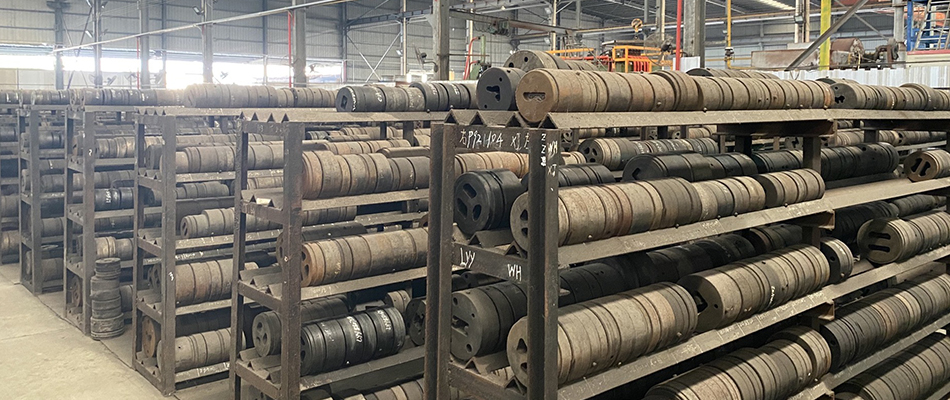
Aluminum profile molds are like the "stamps" used to make aluminum profiles; their quality directly determines the quality and production efficiency of the aluminum profiles. However, developing a qualified aluminum profile mold is not easy. Below, I will explain the difficulties in a simple way.
Basic Types of Molds
1. Solid Mold (Flat Mold): Flat molds are mainly used to produce solid aluminum profiles and are suitable for profiles with simple cross-sections.
2. Hollow Mold (Flow Divider Mold): Flow divider molds are used to produce hollow aluminum profiles and are suitable for profiles with more complex structures.
Five Major Challenges in Development
1. High Dimensional Accuracy Requirements: Imagine engraving words on a hair's breadth; the precision requirements for aluminum profile molds are roughly like that. International standards require an error of no more than 0.2 mm, and some high-end products even require 0.1 mm. Such high precision poses a huge challenge to processing equipment and technology.
2. Complex Structures Difficult to Design: Some aluminum profile cross-sections are as complex as a maze, requiring the design of many small channels inside the mold to allow the aluminum material to flow through. The more numerous and denser the channels, the greater the design difficulty. It's like arranging a complex piping system in a small box without causing leaks.
3. Thickness and thinness are difficult to handle. Aluminum profiles can be thick in some places and thin in others, like making an unevenly thick cookie. The mold design must ensure that the aluminum flows evenly through all parts; otherwise, thicker sections will become blocked, and thinner sections will break.
4. Balanced aluminum flow is crucial. Aluminum flowing in the mold is like multiple streams converging into a large river. If some streams flow faster than others, the resulting aluminum profile will be crooked. Designers must precisely calculate the size of each channel to ensure a consistent aluminum flow rate.
5. The mold must withstand extreme conditions. The mold must withstand high temperatures (approximately 500℃) and high pressure (equivalent to the weight of hundreds of elephants) during operation, like doing heavy work in a sauna every day. Poor material selection or improper heat treatment can quickly damage the mold.
In summary: Although aluminum profile mold development is challenging, continuous technological innovation has resulted in increasingly precise and durable molds capable of producing high-quality aluminum profiles of various complex shapes, meeting the needs of construction, transportation, electronics, and other fields.

Phone
+86-021-5788 5585
+86-133 8191 2789
Address
No. 218, Zhongde Road, Xiaokunshan Town, Songjiang District, Shanghai, China
Media
