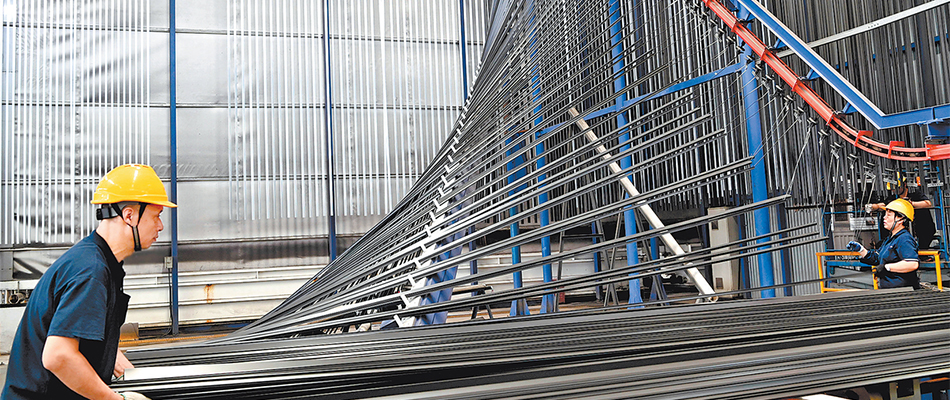
Surface treatment technology for aluminum profiles is a key process for improving product performance, extending service life, and enhancing aesthetics. Based on industry practice and the latest technological developments, the following is a detailed analysis of the main surface treatment technologies for aluminum profiles, including process principles and applicable industries.
I. Anodizing Treatment
Process Principle: Anodizing is a process that forms an aluminum oxide (Al₂O₃) film on the surface of aluminum through electrolysis. The aluminum material is placed as the anode in an electrolyte (usually sulfuric acid solution), and an electrochemical reaction occurs under the action of an applied current (12-18V), generating a porous oxide film (5-25μm thick). Subsequently, a sealing treatment is performed to close the micropores and improve corrosion resistance.
Application Industries: Widely used in aerospace, electronics, building decoration, and machinery equipment. For example, in the aerospace field, hard anodizing can achieve a surface hardness of 400-1200 HV, meeting the requirements for high strength and wear resistance; in the electronics and electrical appliance field, anodizing provides excellent insulation, with a breakdown voltage greater than 30V/μm.
II. Electrophoretic Coating Treatment
Process Principle: The electrophoretic coating is dissolved in water, causing electrolysis to generate charged particles. Under the action of an external electric field, the charged particles move towards the opposite electrode and deposit on the surface of the aluminum profile, forming a dense and uniform film. It can be divided into anodic electrophoretic coating (resin particles ionize into negative ions) and cathodic electrophoretic coating (resin particles ionize into positive ions).
Application Industries: Commonly used in automotive shells and accessories, bicycle handlebars and accessories, daily-use small hardware accessories, furniture, handicrafts, etc. For example, electrophoretic coating on car bodies creates a corrosion-resistant and aesthetically pleasing protective film, resisting the erosion of cement, mortar, and acid rain.
III. Powder Coating
Process Principle: Utilizing electrostatic adsorption, powder coating is sprayed onto the surface of aluminum profiles through a spray gun. It then melts and flows at high temperatures, forming a uniform, dense, and smooth film.
Application Industries: Widely used in the automotive industry, electrical insulation, corrosion-resistant chemical pumps, valves, cylinders, pipelines, outdoor steel components, steel furniture, castings, etc. For example, in the automotive industry, powder coating provides excellent corrosion resistance and aesthetics for parts.
IV. Fluorocarbon Coating
Process Principle: Fluorocarbon resin coatings are used for spraying, typically employing a multi-layer spraying process, including primer, topcoat, and clear coat, followed by baking and curing. Application Industries: Primarily used for surface treatment of high-end aluminum profiles, such as building curtain walls and high-end doors and windows. Its coating exhibits excellent weather resistance and UV resistance, making it suitable for long-term outdoor use.

 English
 Español